Brazil is one of the rare volleyball countries where the sport has two powerful identities at once. Indoors, it is a national-team giant with Olympic gold medals, world titles, legendary coaches, professional clubs, and a style of play that has influenced the global game for decades. On the sand, Brazil is just as important: a beach volleyball nation whose athletes helped define the Olympic era and turned the country’s coastline into one of the sport’s most recognizable competitive settings.
That dual identity gives volleyball in Brazil a depth that few countries can match. It is not simply an indoor powerhouse that also happens to have good beach players. It is a volleyball culture with two elite branches, both connected to the same broader national habits: athletic improvisation, technical training, emotional intensity, and a long-standing belief that Brazilian teams should expect to compete for medals. From packed indoor arenas to beach courts along the Atlantic coast, Brazil has built one of the most complete volleyball ecosystems in the world.
A National Volleyball Power Built Across Generations
Brazil’s place in volleyball history was not built on one golden team or one short cycle of success. The country developed into an international power through several generations of athletes, coaches, clubs, and federation investment. By the late twentieth century, Brazilian volleyball had become a serious global force, and by the 1990s and 2000s, it was one of the defining programs in world volleyball.
The men’s national team helped establish that reputation with Olympic gold in 1992, a breakthrough that changed the way Brazil was viewed in the sport. That team showed that Brazil could compete not only with traditional European powers and the great Soviet-influenced systems, but also with its own rhythm and technical personality. The 1992 Olympic title gave Brazilian indoor volleyball a permanent place in the national sports conversation and helped inspire the professional and youth systems that followed.
The next great men’s era pushed Brazil even higher. Under Bernardinho, Brazil became the standard for modern international volleyball during much of the 2000s. The team combined elite serving, fast transition offense, disciplined floor defense, and extraordinary emotional control in pressure matches. Players such as Giba, Sérgio, Dante, Gustavo, André Nascimento, Rodrigão, Nalbert, and Ricardinho became part of a generation that made Brazil feel almost inevitable in major finals. The Olympic gold in 2004, world championship success, and repeated runs through the World League created one of the most dominant stretches any men’s national team has produced.
Brazil’s women built an equally important legacy. Under José Roberto Guimarães, the women’s national team turned years of near misses and deep tournament runs into Olympic gold in 2008 and again in 2012. Those teams had star power, but they were not just built on star power. They had balance: strong serve receive, mobile middles, sharp setting, experienced liberos, and outside hitters who could score out of system. Fofão, Sheilla, Jaqueline, Fabiana, Thaisa, Paula Pequeno, Fernanda Garay, and others gave Brazil a women’s volleyball identity based on skill, athleticism, and match management.
Together, the men’s and women’s programs made volleyball one of Brazil’s premier Olympic sports. Soccer may dominate the national imagination, but volleyball has earned a different kind of respect: it is the sport where Brazil expects organization, professionalism, and podium-level results.
The Brazilian Style of Indoor Volleyball
Brazilian indoor volleyball has often been associated with speed, creativity, and emotional momentum, but its best teams have also been highly structured. The stereotype of Brazilian flair only tells part of the story. At the international level, Brazil has produced teams that play with tactical discipline, especially in serve pressure, defensive positioning, and transition after the dig.
The country’s best men’s teams have usually been dangerous because they can attack in multiple ways. Brazil has produced dynamic outside hitters, quick middles, athletic opposites, and setters comfortable running tempo. The ball does not have to be perfect for Brazil to stay dangerous. When serve receive is strong, Brazilian setters can use the full net. When the pass breaks down, the outside hitters and opposites have often been good enough to manage difficult high-ball situations.
The libero position has also been central to Brazil’s identity. Sérgio Santos, known as Serginho, became one of the most respected liberos in volleyball history because of his range, reading ability, and leadership. His presence helped show how much Brazil valued the defensive side of the game. Brazilian volleyball at its best has never been just about scoring. It has been about extending rallies, converting broken plays, and forcing opponents to win points more than once.
On the women’s side, Brazil has often been defined by balance and adaptability. The great Brazilian women’s teams were not locked into one narrow system. They could win with speed through the middle, heavy swings from the pins, tactical serving, and long defensive rallies. Their best teams had the technical base to stay composed in difficult rotations, which mattered against physically imposing opponents such as Russia, China, the United States, Italy, and Serbia.
Brazilian teams also tend to carry visible emotion without losing the match structure. The celebrations, bench energy, and crowd connection are part of the country’s volleyball personality, but the elite teams are built on training detail. The emotion is not a substitute for system. It is layered over years of repetition, coaching, and competitive expectation.
Superliga and the Club Foundation
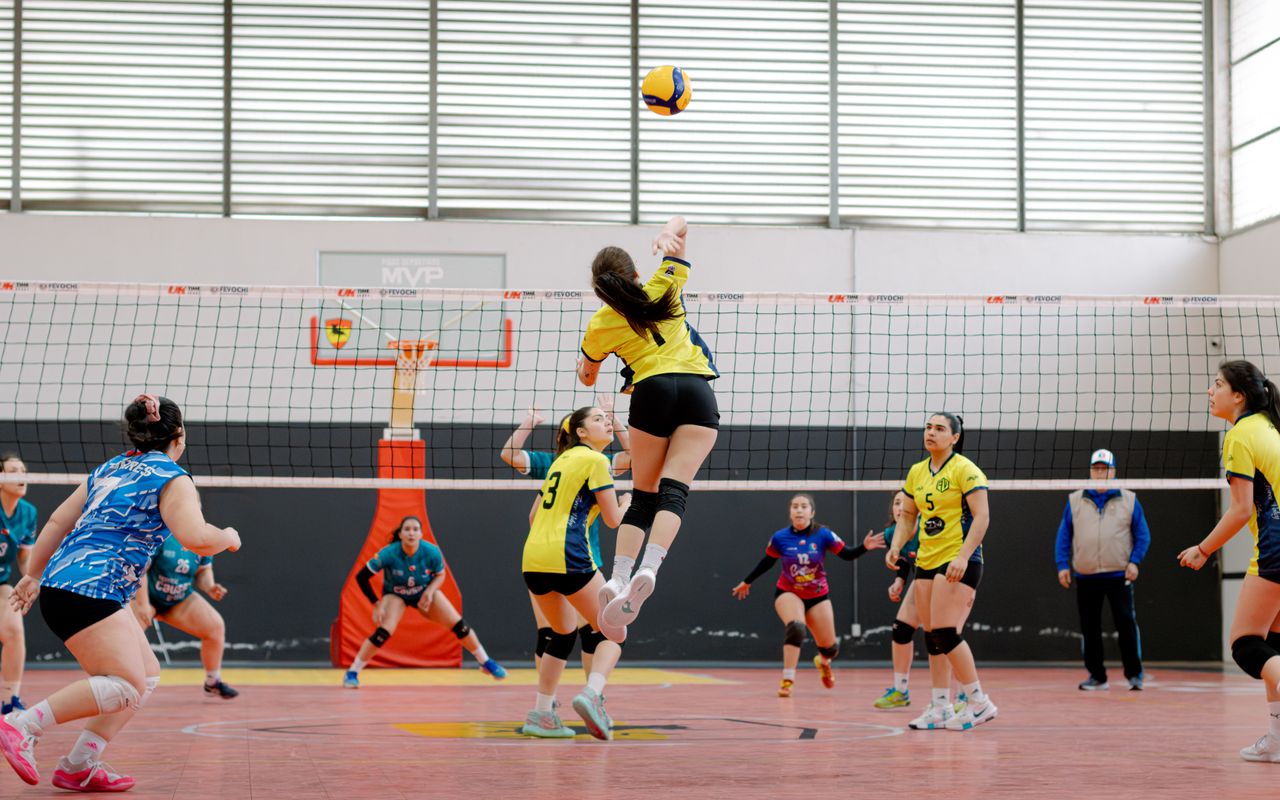
Brazil’s national-team success has been supported by one of the strongest club systems outside Europe. The Superliga has played a major role in keeping high-level volleyball visible within the country and giving Brazilian players a serious domestic platform. It has also attracted international athletes, strengthened coaching networks, and created a competitive bridge between youth development and national-team volleyball.
Brazilian clubs have helped turn volleyball into a year-round sport rather than a national-team event that appears only during the Olympics. Cities such as Belo Horizonte, Rio de Janeiro, São Paulo, Osasco, Uberlândia, Campinas, and others have all been connected to important volleyball programs at different points. Club volleyball in Brazil provides the weekly rhythm that sustains the sport: regular matches, fan bases, sponsorships, youth academies, and professional coaching staffs.
Minas, Sada Cruzeiro, Osasco, Praia Clube, Flamengo, Campinas, and other clubs have contributed to the depth of the Brazilian game. Some are known for women’s volleyball, others for men’s dominance, and some for broader multi-sport institutional support. Sada Cruzeiro, in particular, became one of the most recognizable men’s club powers in the world, with domestic titles, South American success, and FIVB Club World Championship achievements that placed Brazilian club volleyball firmly on the global map.
The women’s club game has been just as important to Brazil’s identity. Osasco and Rio-based programs helped shape eras of elite women’s volleyball, while Minas and Praia Clube have become major forces in the modern landscape. The women’s Superliga has kept many of Brazil’s top players competing at home and has provided a stage for younger athletes to develop against veterans and international-level competition.
The club system also gives Brazilian volleyball a regional texture. This is not a sport that exists only through the national federation. It has local loyalties, club rivalries, and fan communities. For a volleyball country to stay elite over decades, that kind of domestic base matters.
Beach Volleyball as a Brazilian Signature
If indoor volleyball made Brazil an Olympic powerhouse, beach volleyball made Brazil one of the sport’s defining nations. The connection between Brazil and beach volleyball feels natural because of geography, climate, and coastal culture, but the country’s success on sand has never been casual. Brazil turned beach volleyball into a serious competitive discipline long before many countries had fully professionalized their beach programs.
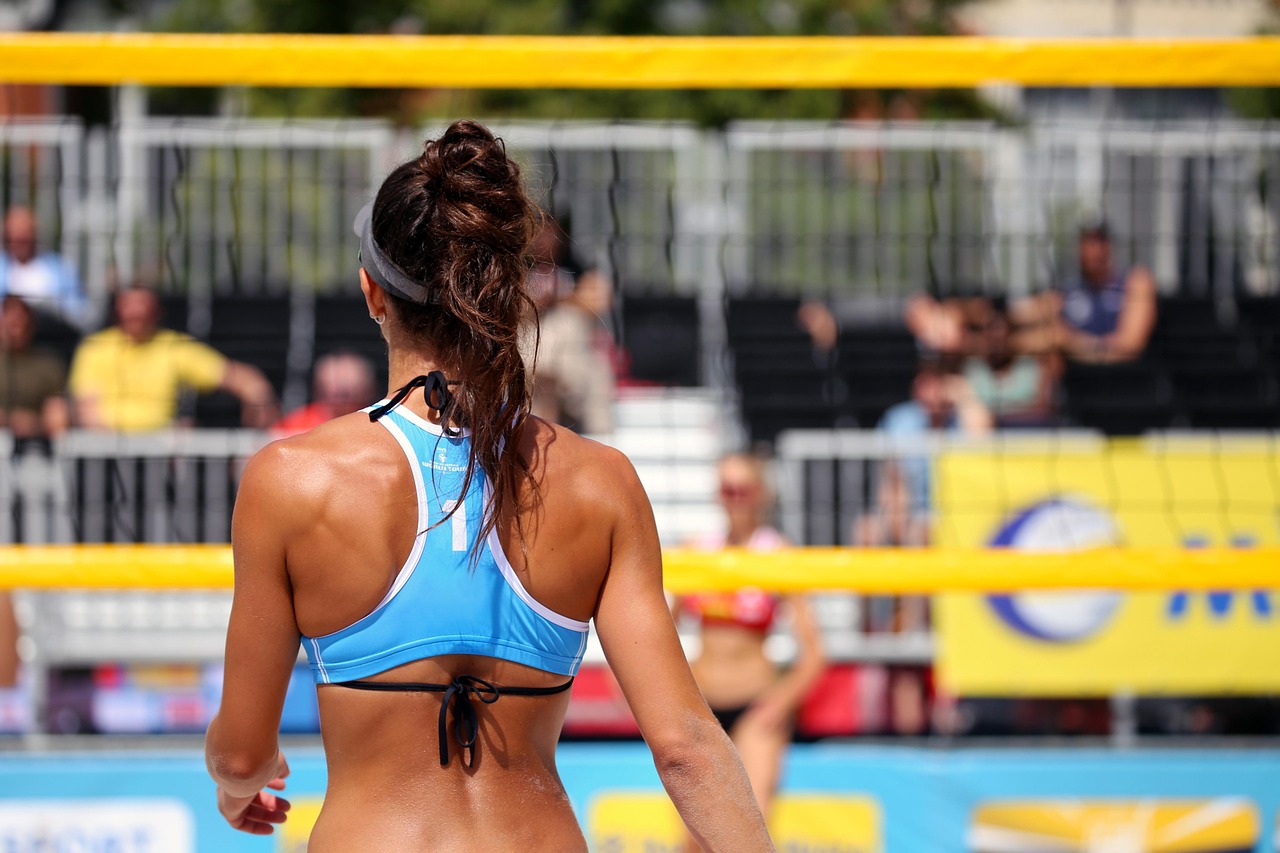
The beaches of Rio de Janeiro are central to that image. Copacabana and Ipanema are not just scenic backdrops; they are part of volleyball history. They represent a public, visible, technically demanding version of the sport where athletes learn ball control, wind management, footwork in sand, and the two-person responsibility that makes beach volleyball so different from indoor volleyball. On a beach court, there is nowhere to hide. Every player must pass, set, attack, serve, block or defend, and manage the rhythm of the match.
Brazilian beach volleyball has produced some of the most important athletes in the sport. Jackie Silva and Sandra Pires won the first Olympic women’s beach volleyball gold in 1996, giving Brazil a foundational place in the discipline’s Olympic history. On the men’s side, names such as Emanuel Rego, Ricardo Santos, Zé Marco, Márcio Araújo, Alison Cerutti, Bruno Schmidt, and others have helped define different eras. Emanuel, in particular, became one of beach volleyball’s great figures through longevity, technical skill, and sustained international success.
Brazil’s women have also been central to beach volleyball’s global development. Adriana Behar and Shelda were among the dominant teams of their era, while later pairs continued Brazil’s medal tradition. The country has repeatedly produced teams with excellent ball control, tactical serving, and the ability to manage long tournaments in difficult conditions.
Beach volleyball in Brazil is both elite and deeply visible. It is a sport that fits the landscape, but it also fits the country’s athletic imagination: improvisational, physical, technical, and expressive. The beach game gives Brazil another volleyball identity beyond the gym, and in some parts of the country, especially along the coast, it is the most recognizable form of the sport.
From School Gyms to Elite Pathways
Brazil’s volleyball development system depends on a mix of schools, social projects, clubs, municipal programs, and professional organizations. It is not identical to the American school-and-college model, and it is not purely a European club academy model either. Brazil’s system has its own shape, with clubs and institutions playing a major role in identifying and refining talent.
Young players often enter the sport through school, community programs, or local clubs. From there, the serious prospects move into more competitive environments where training becomes more specialized. The best players are developed through repetition: passing platforms, footwork, arm swing mechanics, blocking movement, serve receive patterns, defensive reading, and positional intelligence. Brazil’s top athletes often look creative in matches because the technical base has been built early.
Height and athleticism matter, especially at the international level, but Brazil has also valued all-around skill. Outside hitters are expected to pass and defend. Setters are expected to lead emotionally and tactically. Middles must be fast enough to affect the block and available in transition. Liberos are treated as major pieces, not secondary specialists. That player-development philosophy has helped Brazil remain competitive even as international volleyball has become more physical.
The connection between club volleyball and national-team development is especially important. Superliga clubs give young athletes a professional environment where they can train with experienced players and learn the speed of high-level competition. South American club tournaments and international club events then expose Brazilian players to different styles. By the time the best athletes reach the national team, they are usually not starting from scratch. They have already been tested by professional match pressure.
Brazil also benefits from volleyball’s strong place in women’s sports. Women’s volleyball has long had serious visibility, elite role models, and a respected national-team tradition. That matters for participation. In many countries, volleyball is popular among girls but lacks a professional or national-team pathway with real public recognition. Brazil has had that pathway for decades.
Coaches Who Shaped the Standard
Brazil’s volleyball rise cannot be separated from coaching. Bernardinho and José Roberto Guimarães are two of the most important volleyball coaches in modern history, and their impact reaches beyond wins and medals.
Bernardinho became associated with intensity, preparation, and a relentless training culture. His teams were known for their competitive edge, but also for the details: defensive organization, serve targeting, transition speed, and the ability to make tactical adjustments during long matches. He helped turn Brazil’s men into a dynasty and influenced expectations throughout the country’s volleyball structure.
José Roberto Guimarães holds a unique place because of his success with both men’s and women’s volleyball. After being part of Brazil’s men’s Olympic gold in 1992 as coach, he later led the women’s national team to Olympic gold in 2008 and 2012. His career reflects the depth of Brazilian volleyball knowledge across both sides of the sport. He has been central to the women’s program’s identity: composed, skilled, resilient, and tactically mature.
Brazilian coaching has often emphasized the mental demands of volleyball. The sport changes quickly. A team can control a set and lose it in one bad rotation. Serve receive can collapse. A setter can lose rhythm. A hitter can get trapped by a disciplined block. Brazil’s best teams have been trained not just to execute skills, but to survive momentum swings. That psychological layer has been a major part of the country’s international success.
Rivalries and the Weight of Expectation
Because Brazil has been elite for so long, its volleyball rivalries carry real weight. In men’s volleyball, Brazil’s matches against Italy, Russia, Poland, the United States, France, Argentina, and Serbia have often felt like measuring-stick events. These are not casual international fixtures. They are matches where systems, generations, and national volleyball philosophies collide.
Against European powers, Brazil has often had to solve size, blocking, and serving pressure. Against the United States, it has faced athleticism, tactical discipline, and strong out-of-system attacking. Against Argentina, the rivalry carries regional meaning, especially because Argentina has long had the technical quality and emotional edge to challenge Brazil in South American competition. Even when Brazil is the more decorated program, Argentina matches can be tense because familiarity changes the rhythm.
On the women’s side, Brazil’s rivalries with the United States, China, Russia, Italy, Serbia, and Japan have helped define international cycles. The United States has often represented system efficiency and depth. China brings height, structure, and Olympic tradition. Japan tests ball control, speed, and defensive patience. Serbia and Italy bring elite attackers and high-level European club experience. Brazil’s ability to remain in that group for decades speaks to the strength of its program.
Expectation is part of the Brazilian volleyball condition. For many countries, reaching a semifinal is a breakthrough. For Brazil, it can feel like the minimum standard in a strong cycle. That expectation creates pressure, but it also sustains investment and seriousness. Players are not only representing a national team. They are stepping into a tradition built by Olympic champions, world champions, and club legends.
Volleyball Culture Beyond the Medal Count
The medal count matters in Brazil, but the culture is broader than podium finishes. Volleyball has a visible place in Brazilian sports media, particularly during Olympic years and major international tournaments. National-team matches can draw wide attention, and top players become recognizable beyond the small circle of hardcore volleyball followers.
The sport also occupies a valuable space because it has strong men’s and women’s traditions. In Brazil, women’s volleyball is not treated as an afterthought. The women’s national team has had stars, sponsors, pressure, television audiences, and major public expectations. That parity of seriousness strengthens the entire volleyball ecosystem.
Beach volleyball adds another public-facing layer. It is accessible in a way indoor volleyball sometimes is not. A beach court is visible. People can watch from the sand, from a promenade, or from nearby. That visibility helps connect recreational players to elite athletes. The line between public play and professional aspiration can feel closer on sand than inside a closed arena.
Brazilian fans bring energy to volleyball, but they also understand the sport. They know when a server is targeting a weak passer. They recognize a big block touch, a setter winning a one-on-one, a libero saving a broken rally, or an opposite carrying a bad rotation. That technical literacy gives Brazilian volleyball crowds a different edge. The atmosphere is emotional, but it is not uninformed.
The Future of Volleyball in Brazil
Brazil’s future in volleyball is built on a strong foundation, but it is not automatic. International volleyball has become deeper. The men’s game now includes powerful European teams with elite professional leagues, advanced analytics, and enormous serving pressure. The women’s game is equally crowded, with the United States, China, Italy, Serbia, Turkey, Japan, Poland, and others producing strong cycles. Brazil remains a major power, but the margin between medal contention and early elimination is thinner than it once was.
That makes development even more important. Brazil’s challenge is not simply to produce talented players; it is to keep producing complete players. Modern volleyball demands pin hitters who can pass under pressure, middles who can close blocks against fast offenses, setters who can run tempo from imperfect passes, and liberos who can handle servers attacking every seam. In beach volleyball, the world has also caught up. Countries that once treated beach volleyball as a secondary discipline now invest in coaching, strength training, scouting, and year-round competition.
Brazil still has advantages that most countries would envy. It has history, role models, professional clubs, elite coaches, beach culture, indoor tradition, and a population that understands volleyball as a serious sport. The country can develop athletes for both versions of the game, and its best players grow up knowing that Brazilian volleyball is supposed to matter internationally.
The next era will depend on how well Brazil refreshes its talent pipeline while protecting the qualities that made it great. The country’s volleyball identity has never been one-dimensional. It is not just power, not just technique, not just emotion, not just beach culture, and not just Olympic memory. Brazil’s place in volleyball comes from the combination: indoor excellence, beach mastery, professional systems, coaching standards, and a competitive imagination large enough to expect greatness in both the gym and the sand.
Brazil remains one of volleyball’s essential countries because it has shaped the sport from multiple directions. It has produced champions indoors and outdoors, men and women, players and coaches, club dynasties and national-team icons. In the global volleyball map, Brazil is not a supporting market or a periodic contender. It is one of the places where the modern game learned what elite volleyball could look like.