Cyprus has a volleyball identity shaped by geography as much as competition. It is not one of Europe’s dominant indoor powers, and it does not carry the global beach volleyball reputation of Brazil, the United States, or Australia. Its volleyball story is more specific: a Mediterranean island scene where indoor club competition, national-team ambition, beach volleyball, and youth development all exist close together. In Cyprus, volleyball works through concentration. The player pool is not enormous, the cities are not far apart, and the sport’s major clubs and federation structures carry much of the responsibility for keeping the game visible.
That gives Cypriot volleyball a distinct profile. It is serious without being oversized. It is competitive without being saturated. It has enough club history to create rivalries and enough coastline to make beach volleyball more than a seasonal side activity. The country’s best volleyball identity is hybrid: an indoor club scene with a growing beach volleyball dimension and a national-team program that has often had to measure itself against larger European systems.
Indoor Volleyball and the Club Backbone
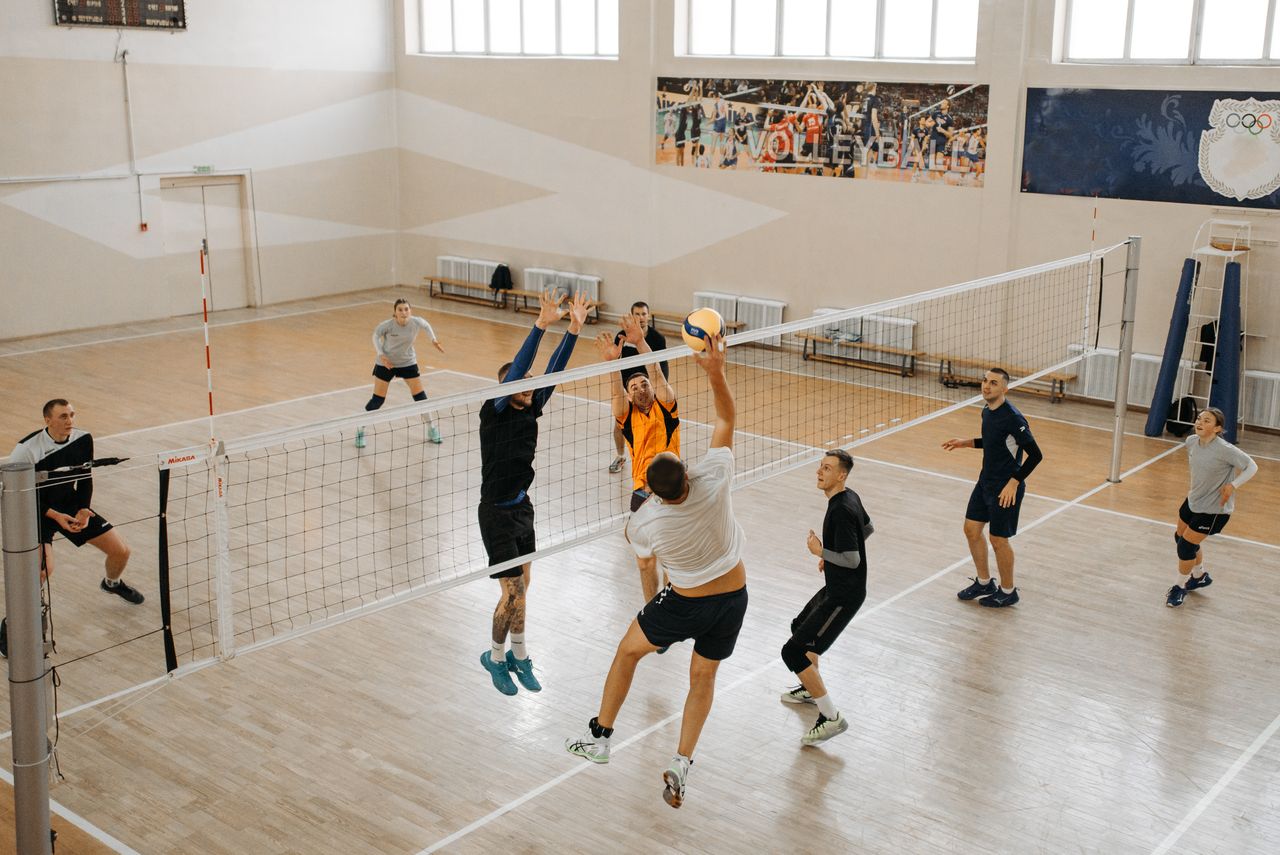
The indoor game remains the foundation of volleyball in Cyprus. The country’s volleyball structure is built around clubs that give the sport continuity from season to season. Names such as Anorthosis Famagusta, Omonia Nicosia, Nea Salamis, Pafiakos Paphos, APOEL, and AEK Karava have given the men’s game a competitive map, with titles and rivalries spread across several recognizable sporting institutions. Anorthosis has historically been one of the major names in Cypriot men’s volleyball, while Omonia and Pafiakos have been central to the more recent championship picture.
That club-based identity matters because Cyprus does not have the depth of a large European volleyball nation. The sport depends heavily on well-run clubs, local gyms, consistent coaching, and the ability to keep young athletes in the system long enough to become senior-level players. Indoor volleyball in Cyprus is therefore less about massive crowds or broad professional scale and more about competitive seriousness inside a relatively compact sporting ecosystem.
The style of indoor volleyball that emerges from a smaller national system often depends on discipline and adaptability. Teams cannot rely only on overwhelming physical depth. Setters have to manage matches carefully, liberos and passers become especially important, and outside hitters are asked to carry heavy two-way responsibility. A club that can serve aggressively, stabilize reception, and defend well in transition can separate itself quickly. In a smaller league, tactical organization can matter as much as raw roster strength.
Cyprus has also remained connected to the European volleyball calendar through qualification events and continental competition. The men’s national team has taken part in EuroVolley qualification campaigns, including a 2020 qualifying pool in Nicosia against Spain, Moldova, and Latvia. That kind of competition is important for Cyprus because it places local players and staff in direct comparison with deeper systems. Even when qualification is difficult, the experience sets standards for tempo, blocking, physicality, and serve pressure.
A National-Team Scene Measured Against Bigger Systems
For Cyprus, national-team volleyball is often about ambition within limits. The country is not expected to overwhelm Europe’s leading indoor nations, but it has a meaningful place in the continental structure. Its teams compete in qualifying pathways, small-country competitions, and development events that give Cypriot volleyball a benchmark beyond the domestic league.
This is where Cyprus’ size becomes both a challenge and a defining feature. The national program cannot simply wait for a huge wave of elite athletes. It must identify players early, keep them engaged, and use club competition as the primary engine for technical growth. A young middle blocker, setter, or opposite who performs well domestically may be pushed toward international matches faster than a player in a larger federation. That can accelerate development, but it also exposes the gap between domestic rhythm and higher-level European speed.
The result is a national-team identity built on persistence. Cyprus volleyball is not trying to be mistaken for Poland, Italy, Serbia, or Turkey. Its progress is more realistically measured through competitive performances, stronger age-group development, improved beach results, and the ability to make home events matter. When Cyprus hosts qualifying matches or European events, the national team gains more than fixtures. It gains visibility, atmosphere, and a chance to connect the sport to a broader public.
Beach Volleyball Fits the Island
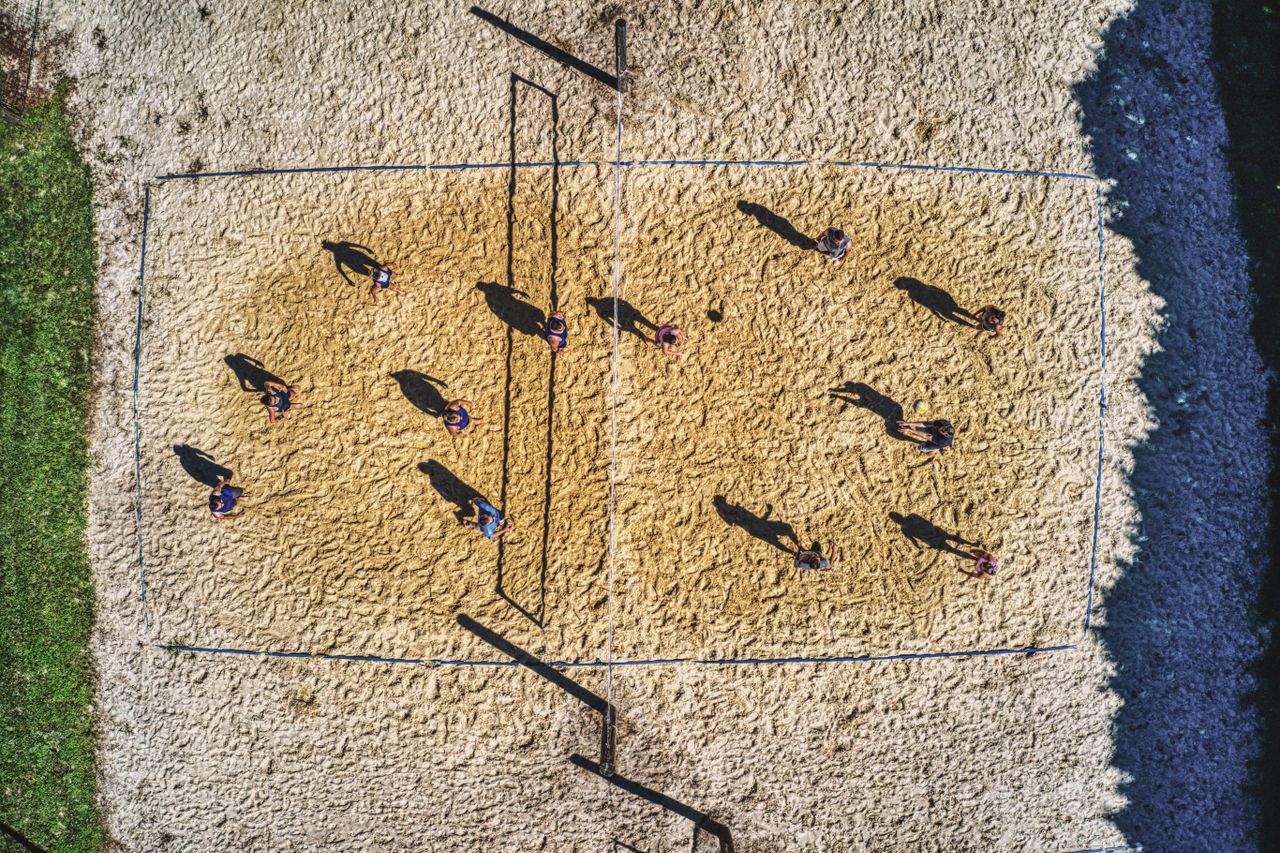
Beach volleyball gives Cyprus one of its most natural growth lanes. The country’s climate, tourism economy, and coastline make the sand game a logical part of the volleyball landscape. Unlike some inland volleyball countries where beach volleyball feels like an imported summer variation, Cyprus can present the outdoor game as part of its own sporting environment.
Protaras, Larnaca, and other coastal settings give Cyprus the kind of backdrop that fits international beach volleyball. The significance is not just aesthetic. Beach volleyball can help a smaller federation reach audiences that indoor volleyball sometimes struggles to reach. It is visible, accessible, and easy to understand for casual spectators. It also gives athletes another competitive pathway, especially in a country where the indoor professional structure is naturally limited by market size.
Cyprus’ hosting of CEV Beach Volley Nations Cup activity in Protaras shows how the island can use beach volleyball to raise its profile. The 2026 men’s preliminary phase at Fig Tree Bay brought Cyprus into a European beach volleyball event setting alongside Poland, Israel, and Bulgaria. For a country building its beach identity, hosting matters. It places local organizers, players, fans, and media around the sport in a way that a domestic tournament alone cannot.
Beach volleyball also demands a different athlete. Indoor systems can hide or protect some weaknesses through specialization; the beach does not. Players must serve, pass, set, attack, block, defend, read wind, manage pace, and solve problems without a full six-player structure. For Cyprus, that can be valuable. Even players who remain primarily indoor athletes can benefit from beach training because it sharpens ball control, court awareness, and individual responsibility.
Youth Development and the Next Layer
The long-term ceiling of Cypriot volleyball depends on development more than occasional senior results. The country needs a steady flow of players from school and youth programs into club volleyball, and from club volleyball into senior competition. The Cyprus Volleyball Federation’s recent activity around developmental championships and age-group participation reflects the importance of this base. Youth categories, U16 and U20 activity, and junior beach events are not side details; they are the mechanism by which a small volleyball country protects its future.
The challenge is competition for athletes. Cyprus has football, basketball, athletics, swimming, and other sports competing for attention. Volleyball must offer enough structure and reward to keep players invested. For girls and boys with the right height, coordination, explosiveness, and tactical patience, the sport can provide a serious competitive pathway. But it needs coaches who can teach first contact, footwork, spacing, blocking mechanics, and serving under pressure before bad habits settle in.
Club identity helps here. When young players can see a connection between youth teams and senior clubs, the sport becomes more coherent. A young player in Paphos, Nicosia, Limassol, Larnaca, or Famagusta-linked club structures can understand that volleyball is not just a school activity. It is a competitive ladder. The stronger that ladder becomes, the better Cyprus can perform both indoors and on the beach.
The Future of Cyprus Volleyball
Cyprus volleyball’s future is likely to remain hybrid. The indoor league will continue to provide the sport’s competitive foundation, while beach volleyball offers the clearest route for visibility, event hosting, and international branding. The national teams will still face the structural reality of competing against countries with larger player pools, deeper professional leagues, and more established volleyball cultures. But Cyprus does not need to copy those countries to build a meaningful volleyball identity.
Its advantage is focus. A compact country can create connections quickly between clubs, federation programs, youth competitions, beach events, and national-team activity. If the best young athletes are identified early, coached well, and given enough meaningful matches, Cyprus can keep raising its floor. The next step is not only producing occasional standout players, but building a broader system where technical quality is normal.
The sport’s strongest future in Cyprus will come from linking the gym and the beach. Indoor volleyball gives the country structure, tactics, and club tradition. Beach volleyball gives it visibility, geography, and a Mediterranean identity that feels authentic. Together, they make Cyprus more than a small participant in European volleyball. They make it a compact volleyball country with a clear sporting lane: organized indoors, natural outdoors, and still working toward a larger competitive presence.