Mumbai’s volleyball identity is urban, ambitious, and still developing. It is not yet a city with the deep volleyball infrastructure of Chennai, Kochi, Hyderabad, or some of India’s more established volleyball regions, but it has something equally important: scale, media visibility, corporate energy, schools, colleges, and a professional team brand that connects the city to the modern Indian volleyball conversation.
The arrival of the Mumbai Meteors in the Prime Volleyball League gave the city a clearer place in Indian professional volleyball. The league’s official platform identifies the Mumbai Meteors as one of its participating teams, and recent league coverage placed Mumbai in the 2025 final against Bengaluru Torpedoes. That matters because Mumbai is not just any Indian city. When a Mumbai team is visible in a national sports league, it changes the sport’s relationship with sponsors, media, casual fans, and young athletes who may previously have seen volleyball mostly as a school or community game.
Mumbai’s volleyball culture has historically had to compete for attention. Cricket dominates the city’s sports imagination. Football has deep pockets of support. Badminton, kabaddi, basketball, athletics, and fitness-based sports all fight for space in a dense urban environment. Volleyball survives in that environment because it is adaptable. It can be played in schools, colleges, community courts, indoor halls, and organized tournaments without needing the same land footprint as field sports.
That adaptability is central to Mumbai’s volleyball story. The city is crowded, fast, and space-constrained, so volleyball has to attach itself to institutions. Schools and colleges are especially important. In India, college and departmental sport have often played major roles in keeping volleyball competitive, and Mumbai’s student population gives the sport a deep potential base. Volleyball can work well in this setting because it rewards discipline and team structure. A good team does not need only height or power. It needs passing, setting rhythm, coordinated blocking, coverage, and the ability to manage long rallies under pressure.
The professional layer changes the ceiling. With the Mumbai Meteors carrying the city’s name in Prime Volleyball League, local players have a visible reference point. Even if the roster draws from across India and abroad, the existence of a Mumbai-branded team helps young players imagine volleyball as more than inter-school competition. It gives the city a connection to player drafts, televised matches, international athletes, and the growing attempt to package Indian volleyball as a modern spectator sport.
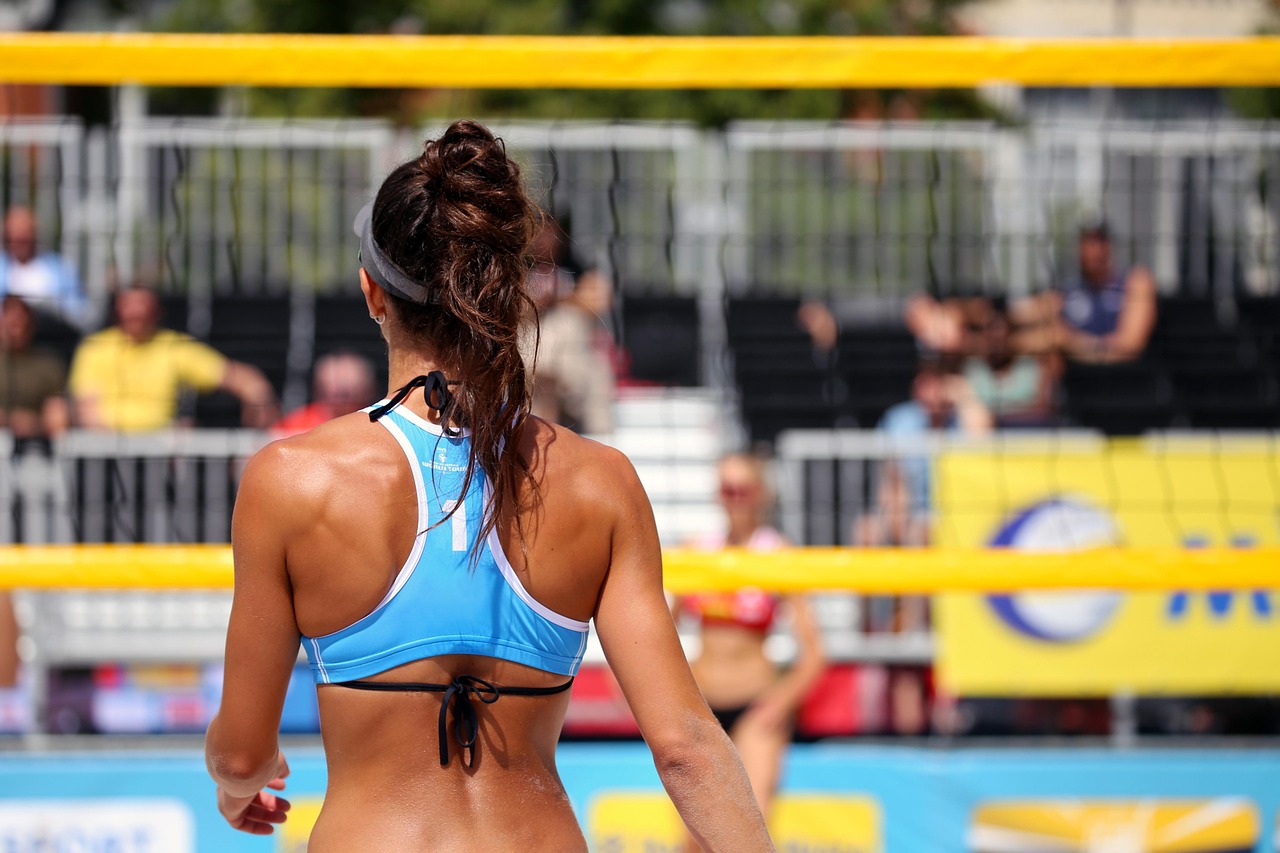
Mumbai’s style as a volleyball city is likely to be hybrid. It has recreational participation, school and college competition, and now a professional identity. It is not a pure beach volleyball city, despite the coastline. Mumbai’s waterfront does not function like a classic open beach volleyball culture in the way seen in Rio de Janeiro, Southern California, or parts of Australia. The city’s density, monsoon rhythm, and limited public sports space make indoor and institutional volleyball more important than sand-court identity.
That said, outdoor volleyball still belongs to the city’s broader participation culture. Community tournaments, school grounds, and informal play can carry the game into neighborhoods where formal facilities are limited. In Mumbai, volleyball’s growth does not have to look like a perfect professional pyramid. It can grow through a combination of school teams, local tournaments, fitness culture, and the visibility created by the Meteors.
The player pathway remains the critical issue. For Mumbai to become a deeper volleyball city, it needs more than a professional team at the top. It needs coaching depth, youth competitions, positional training, and more regular exposure to strong opponents. Setters need years of structured development. Liberos need coaching environments that value first contact rather than treating defense as an afterthought. Middles need timing, strength, and repetition. Outside hitters need to learn how to score against organized blocks, not just dominate weaker school competition.
Women’s volleyball is another important part of the city’s long-term opportunity. Mumbai has the population, schools, universities, and media ecosystem to support stronger girls’ and women’s volleyball, but that requires consistent competition and visible role models. If the professional game in India continues to grow, women’s volleyball could eventually benefit from the broader awareness of the sport.
Mumbai’s future in volleyball depends on whether it can connect three levels: grassroots participation, serious youth development, and professional visibility. The Meteors give the city a symbolic anchor. Schools and colleges give it a participation base. The next step is turning that base into a stronger pipeline.
Mumbai will not become a volleyball city by copying smaller Indian volleyball hotbeds. Its path is different. It is a megacity model: crowded, competitive, media-facing, institution-heavy, and full of untapped athletes. If volleyball can keep gaining visibility in that environment, Mumbai could become one of India’s most important urban volleyball markets.