Spain’s volleyball identity is a hybrid one: serious indoor competition, a legitimate beach volleyball tradition, a strong island presence, and a national scene that has had flashes of European-level success without becoming one of the continent’s permanent powers. It is not a volleyball country in the same automatic sense as Poland, Italy, Serbia, Brazil, or Turkey, but it is also far beyond the level of a casual participation market. Spanish volleyball has professional clubs with real histories, national teams that have produced meaningful continental moments, beach players who have stood on Olympic podiums, and regional pockets where the sport has much deeper roots than outsiders often assume.
The most accurate way to understand volleyball in Spain is to see it as a sport with several centers of gravity. The indoor game has long been shaped by clubs in places such as Almería, Teruel, Soria, Palma, Las Palmas, Tenerife, Melilla, Valencia, Menorca, and Madrid-area communities. Beach volleyball draws naturally from Spain’s Mediterranean, Atlantic, Canary Islands, and Balearic geography. The national-team story has been uneven but not empty, with the men’s European Championship title in 2007 still standing as the country’s most important indoor volleyball achievement. The women’s side has built its own identity through persistence, federation development, and club-based competition, while Spanish beach volleyball has often carried the country’s strongest international visibility.
That mixture gives Spain a distinctive volleyball profile. It is a football-dominated country where volleyball has to fight for media space, sponsorship, and attention, but within the sport’s own ecosystem, Spain has produced clubs, players, coaches, and beach pairs that belong in any serious discussion of European volleyball.
A Volleyball Country Built in Pockets
Spain’s geography matters to its volleyball story. The country is large, regional, and culturally varied, with different sporting identities across the mainland, islands, and coastal communities. Volleyball has not developed evenly across the entire country. Instead, it has formed strong pockets around particular clubs, school systems, regional federations, and beach environments.
On the mainland, indoor volleyball has often depended on club stability and local support. Cities and towns such as Teruel, Almería, Soria, and Valencia show how Spanish volleyball can grow outside the country’s biggest football markets. These places have used club identity, community followings, and sustained coaching structures to remain relevant in the Superliga Masculina. In the women’s game, islands and regional clubs have played an equally important role, with Tenerife, Gran Canaria, Menorca, Haro, Alcobendas, Socuéllamos, and La Laguna among the names that have helped define different eras of Spanish women’s volleyball.
The Canary Islands deserve special attention because they have often punched above their weight in Spanish volleyball. Las Palmas, Tenerife, and other island communities have produced clubs with national ambitions, strong home-court environments, and a volleyball culture that feels different from many mainland markets. The combination of climate, regional identity, local institutional support, and athletic infrastructure has made the islands one of Spain’s most recognizable volleyball zones.
That regional structure helps explain why Spanish volleyball can look stronger from the inside than it appears from the outside. It is not always visible in the national sports conversation, but in the right places, volleyball has a real following. A packed local gym for a Superliga match, a beach tournament along the coast, or a club rivalry involving Canary, Aragonese, Andalusian, Balearic, or Castilian teams can show a more serious volleyball culture than Spain’s national media hierarchy suggests.
The 2007 European Championship and Spain’s Indoor Peak
The defining moment in Spanish indoor volleyball came in 2007, when the men’s national team won the European Championship. It remains the country’s landmark achievement in the six-player game. Spain did not simply have a respectable tournament; it won the continental title in Russia, defeating the host nation in Moscow in a five-set final. For a country outside Europe’s usual volleyball hierarchy, that title was a major statement.
The 2007 team gave Spanish volleyball a reference point that still matters. It showed that Spain could produce a team capable of handling the pressure, physicality, and tactical demands of elite European volleyball. European men’s volleyball is one of the sport’s toughest environments, with Russia, Italy, Serbia, Poland, France, Bulgaria, Germany, and the Netherlands all bringing different traditions of size, skill, and professional depth. Spain’s championship run placed it briefly at the center of that world.
That title did not create a permanent golden age, which is part of the complexity of Spain’s volleyball identity. Unlike the European countries where volleyball sits near the top of the national sports structure, Spain has had to sustain the sport beneath the shadow of football, basketball, tennis, cycling, handball, futsal, and other high-profile competitions. The national team has not consistently stayed among the elite in the same way as Europe’s established powers. Still, the 2007 championship remains proof that Spain’s ceiling in volleyball has never been merely symbolic.
The legacy of that team is also important because it raised expectations for Spanish players and clubs. It gave the sport a national story that could be passed down through coaches, federation programs, and junior players. For young Spanish athletes, the 2007 title is evidence that volleyball in Spain has already reached the top of Europe once. That matters in a sport where belief, structure, and continuity often decide whether a country becomes an occasional surprise or a sustainable contender.
Superliga Masculina and the Club Backbone
The Superliga Masculina is the backbone of men’s indoor volleyball in Spain. It provides the weekly competitive structure that links local clubs to national relevance, and it has produced several long-running program identities. Spain’s top league does not carry the same commercial power as Italy’s SuperLega, Poland’s PlusLiga, or Turkey’s biggest clubs, but it has enough quality and history to function as a serious domestic championship.
Unicaja Almería has been one of the defining names of modern Spanish men’s volleyball. The club has built a reputation around consistency, title contention, and a strong institutional identity in Andalusia. For many years, Almería represented the model of a Spanish volleyball club that could stay nationally relevant through organization, continuity, and a competitive standard that demanded respect from the rest of the league.
CV Teruel became another major pillar of the men’s game. Its rise helped shift attention toward Aragón and showed that volleyball could become a powerful local sports identity in a smaller city. Teruel’s league success, home-court environment, and rivalry matches against other national powers helped create one of the most recognizable club stories in Spain. In volleyball terms, Teruel matters because it demonstrates the sport’s ability to take root where community identification is strong enough to sustain a serious team.
CV Guaguas has become one of the most important names in the contemporary Spanish men’s scene. Based in Las Palmas de Gran Canaria, Guaguas links the modern Superliga to the Canary Islands’ long volleyball tradition. The club’s recent national success has reinforced Gran Canaria’s place near the top of Spanish volleyball and given the league a high-profile island power with both history and modern ambition.
Other clubs have helped keep the league competitive and regionally varied. Soria has long carried volleyball weight in Castilla y León. Melilla adds a distinctive geographic and sporting dimension to the league. Manacor and Palma have connected the Balearic Islands to the national picture. Valencia’s presence matters in a region with a broad sports base and strong youth participation potential. These clubs give Spanish men’s volleyball a map that is wider than Madrid and Barcelona, which is significant in a country where many sports become overly centered on the two largest cities.
Women’s Volleyball and the Importance of Club Tradition
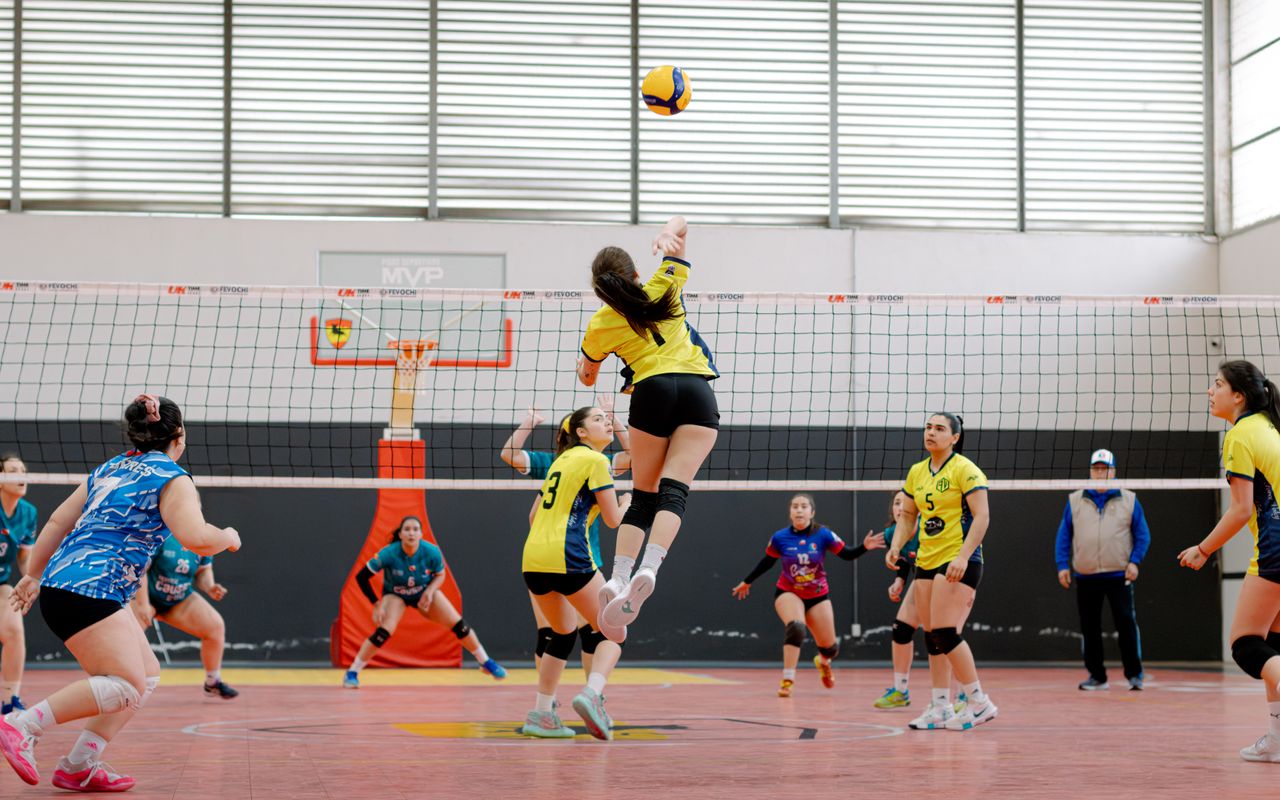
Spanish women’s volleyball has its own geography and legacy. It has often relied on club identity, regional investment, and strong local programs rather than constant national attention. The women’s game in Spain has produced important clubs, meaningful European moments, and a participation base that connects school volleyball, regional competition, and the senior Superliga.
Tenerife Marichal remains one of the historic names in Spanish women’s volleyball. Its European success gave Spain a major club achievement and helped establish the Canary Islands as more than just a domestic volleyball region. A Spanish women’s club winning at the highest European level was not a minor footnote; it showed that the club game in Spain could, at its peak, compete with the strongest institutions on the continent.
The modern women’s league has featured a broad set of competitive identities. Clubs from Menorca, La Laguna, Gran Canaria, Haro, Socuéllamos, Alcobendas, and Andalusia have all contributed to the texture of the league. Some are built around local development. Others rely on smart recruitment, experienced foreign players, or regional support. The best Spanish women’s teams often have to balance ambition with the financial realities of volleyball in a country where women’s club sport still competes for space and resources.
The women’s national team has not had the same headline moment as the men’s 2007 European title, but its role in the Spanish volleyball ecosystem should not be underestimated. National-team programs give players a performance target beyond club competition. They also create visibility for younger athletes who may begin in school or local club volleyball before moving into elite domestic competition. Spain’s women’s volleyball future depends heavily on how well that pathway continues to connect junior development, Superliga experience, and international exposure.
Beach Volleyball: Spain’s Strongest Global Calling Card
If Spain’s indoor volleyball story is built around pockets of club strength and one unforgettable men’s European title, its beach volleyball story has been more consistently visible on the world stage. Spain has the geography for beach volleyball, but geography alone does not produce Olympic-level players. Spain’s beach identity has been built by athletes who turned coastlines and training systems into international results.
Pablo Herrera is central to that story. His Olympic silver medal with Javier Bosma in Athens in 2004 remains one of Spain’s most important volleyball achievements in any discipline. Herrera’s longevity, later partnership with Adrián Gavira, and continued presence across multiple Olympic cycles made him one of the defining figures of Spanish beach volleyball. His career gave Spain a recognizable place in a sport often dominated by Brazil, the United States, Germany, Norway, the Netherlands, and other beach volleyball powers.
The Herrera-Gavira partnership helped keep Spain relevant for years. Their style combined experience, court control, and a high-level understanding of international beach volleyball’s tactical demands. Spain’s beach teams have often needed to win through precision, serving pressure, transition discipline, and smart side-out volleyball rather than overwhelming physical dominance. That has given Spanish beach volleyball a technical identity that fits well with the sport’s international demands.
The women’s beach game has also become an important part of Spain’s volleyball reputation. Liliana Fernández and Elsa Baquerizo carried Spain through multiple Olympic cycles and became one of the country’s signature women’s pairs. More recently, Daniela Álvarez and Tania Moreno have represented a younger generation with the potential to extend Spain’s international beach presence. Their emergence matters because it suggests that Spanish beach volleyball is not only a legacy built around one era, but a continuing development pathway.
Spain’s beaches, islands, and coastal climate create natural participation opportunities, but the elite beach game requires much more than sand and sun. It requires specialized coaching, tournament access, international travel, strength and conditioning, serve-receive training, and the ability to manage pressure in a two-player format where there is nowhere to hide. Spain’s best beach players have shown that the country can meet those demands.
Development Pathways and the Federation Role
The development of Spanish volleyball depends on the relationship between schools, clubs, regional federations, national structures, and senior competition. Like many European countries, Spain’s sports structure is not built around the American college model. Clubs and federations carry more responsibility for identifying, training, and advancing talent.
At the youth level, volleyball competes with football, basketball, handball, tennis, athletics, and other sports for athletes. This makes coaching access and club visibility especially important. A young player in a strong volleyball pocket may enter the sport through school competition, a local club, a municipal program, or a regional development setup. From there, the path depends heavily on geography. A player near an established volleyball club has a different experience from one in an area where volleyball is a secondary or occasional sport.
Spain’s regional diversity can be an advantage when clubs are strong, but it can also create uneven development. The sport needs enough quality coaching across regions to prevent talent from being limited by location. That is one reason national youth championships, regional-team events, federation camps, and club tournaments matter. They bring players into broader competitive environments and allow coaches to compare athletes beyond their local league context.
For beach volleyball, development is even more specialized. Young athletes need exposure to the two-player game early enough to learn its rhythms: reading the wind, managing defensive responsibilities, serving with tactical intent, communicating constantly, and handling the physical load of playing on sand. Spain’s investment in beach development is particularly important because the discipline may offer the country one of its clearest routes to sustained international relevance.
A Volleyball Culture Outside the Mainstream Spotlight
Volleyball in Spain lives outside the country’s biggest sports spotlight, but that does not mean it lacks culture. Its culture is simply more localized and more club-based. In a Superliga gym, the atmosphere is built around proximity. Supporters are close to the court. The sound of serving runs, block touches, bench reactions, and referee whistles fills smaller arenas in a way that can feel sharper than larger, more commercial sports settings.
The sport’s Spanish identity is also shaped by regional pride. When Canary Island clubs succeed, they carry island representation into the national frame. When Teruel competes for titles, it reinforces the possibility that a smaller inland city can matter in a national league. When Almería remains relevant, it keeps Andalusia connected to the country’s volleyball elite. These regional stories give Spanish volleyball much of its character.
The beach scene adds another layer. In coastal Spain, volleyball can be competitive, recreational, and social at the same time. A beach court in Valencia, Barcelona, Málaga, Cádiz, Alicante, Mallorca, Tenerife, or Gran Canaria can connect casual play to the broader image of Spain as a country with outdoor sport built into its landscape. The elite beach game sits at the top of that pyramid, but the cultural base is wider: summer tournaments, local circuits, training groups, and players who move between indoor and outdoor volleyball depending on season and opportunity.
This is where Spain’s hybrid identity becomes clearest. The country has indoor clubs with serious competitive ambition, beach players with Olympic credibility, women’s programs with strong regional roots, and a participation culture that can look different from one autonomous community to another. Spain is not one volleyball market. It is several volleyball markets tied together by federation structure, national leagues, and shared international ambitions.
Spain’s Place in European Volleyball
Spain sits in an interesting place within European volleyball. It has too much history to be called an emerging country, but it does not have the week-to-week elite weight of Europe’s biggest volleyball nations. Its clubs can be competitive domestically and occasionally visible in European competition, but they do not operate with the same resources as the top Italian, Polish, Turkish, or Russian-era club powers. Its national teams have produced important moments, but they have not consistently lived in the medal rounds.
That middle position gives Spain both a challenge and an opportunity. The challenge is visibility. In European volleyball, nations with bigger leagues and stronger national-team cycles can quickly dominate the conversation. The opportunity is that Spain has enough infrastructure, geography, and athletic base to remain dangerous when development aligns. The 2007 men’s title, the history of Tenerife Marichal, the staying power of clubs like Guaguas, Almería, and Teruel, and the Olympic credibility of Spanish beach players all show that Spain has already built pieces of a serious volleyball system.
The next step is consistency. Spain’s volleyball ceiling is not the question; the country has already shown a high ceiling. The question is whether it can produce enough depth across men’s indoor, women’s indoor, and beach volleyball to stay visible across multiple cycles rather than appearing in isolated peaks.
The Future of Volleyball in Spain
The future of volleyball in Spain will likely be shaped by three forces: club stability, youth development, and beach volleyball investment. If the country can keep strong clubs healthy, the indoor game will continue to provide a national competitive structure. If regional federations and junior clubs can broaden the player base, Spain will have a better chance of producing deeper national-team pools. If the beach program continues to develop younger pairs, Spain can remain internationally relevant in a discipline where it already has a proven name.
Women’s volleyball may be one of the most important growth areas. Spain has the sporting infrastructure and regional club base to support a stronger women’s game, but progress depends on resources, visibility, coaching, and the ability to keep talented players in serious competitive environments. The same is true for men’s volleyball, where domestic clubs must keep balancing ambition with the financial limits of the Spanish volleyball market.
Beach volleyball gives Spain a natural advantage, but only if it is treated as a performance pathway rather than a recreational add-on. The success of players like Herrera, Bosma, Gavira, Fernández, Baquerizo, Álvarez, and Moreno has created a clear lineage. The next generation needs competitive volume, international exposure, and enough support to turn Spain’s geography into medals and sustained rankings.
Spain’s volleyball story is not one of constant dominance. It is a story of regional strength, selective excellence, and a sport that has found ways to matter even without occupying the center of the national sports conversation. Its best indoor teams have made smaller cities and island communities feel central to the Spanish volleyball map. Its beach players have carried the flag deep into Olympic and international competition. Its national teams have shown that Spain can break through when talent, coaching, and momentum align.
That makes Spain one of Europe’s more interesting volleyball countries: not a permanent superpower, not a minor participant, but a serious hybrid scene with enough history, geography, and competitive infrastructure to remain relevant. Spanish volleyball is strongest when its different identities work together — the indoor clubs, the islands, the beach courts, the junior systems, the regional rivalries, and the national teams. When those pieces connect, Spain has already shown it can compete with anyone.