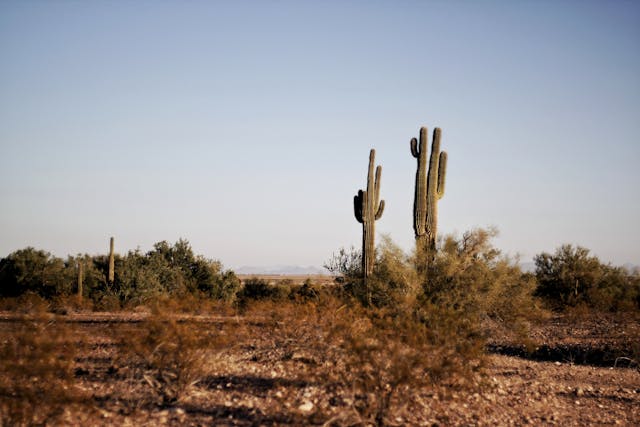
Arizona volleyball has become a true hybrid scene: part indoor college market, part desert club pipeline, and part serious beach volleyball state. It does not fit neatly into the old image of volleyball as either a coastal sand sport or a Midwestern gym sport. Arizona has pieces of both. The state has major NCAA programs, a deep junior club structure, year-round training weather, and enough beach volleyball infrastructure to make the sand game more than a novelty. In Phoenix, Tucson, Tempe, Mesa, Scottsdale, and the surrounding suburbs, volleyball has grown into one of the state’s most competitive women’s sports ecosystems.
The indoor side of Arizona volleyball is anchored most visibly by Arizona State and the University of Arizona. Arizona State’s rise in the Big 12 has been one of the clearest signs that the state’s volleyball reputation is no longer only developmental or regional. The Sun Devils won the 2025 Big 12 regular season championship after also claiming the league title in their first Big 12 season in 2024, giving the program back-to-back conference championships in a major volleyball league. That matters for the state because high-level college volleyball creates a visible standard. Young players in Arizona can see what a Big 12 outside hitter, libero, setter, or middle blocker looks like in person, and they can measure their own development against a national-level pace.
Arizona State’s recent success has also sharpened the competitive profile of the state. The 2025 Big 12 standings showed the Sun Devils at the top of the conference with a 17-1 league record and a 28-3 overall mark, ahead of established volleyball programs such as Kansas, Iowa State, Colorado, Baylor, and BYU. For Arizona volleyball, that kind of season changes the conversation. The state is not just producing athletes who leave for other regions. It now has a flagship indoor program capable of being a national factor while playing in one of the sport’s most competitive conferences.
The University of Arizona gives the state another major indoor presence, especially in Tucson, where volleyball has long had a college-town foothold. The Wildcats compete in the Big 12, and their 2026 schedule shows the program operating in a national recruiting and scheduling environment, with conference matches against programs such as Colorado and Iowa State. Arizona’s indoor identity is not built on one school alone. It is a rivalry state, a recruiting state, and a state where the Phoenix-Tucson split gives volleyball two different centers of gravity.
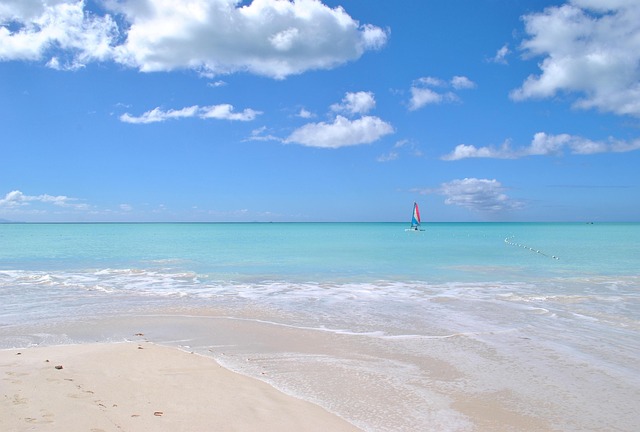
What makes Arizona especially distinct, though, is the way indoor and beach volleyball sit side by side. Arizona is not a beach state in the oceanfront sense, but it has built a real sand volleyball culture anyway. The weather allows outdoor training for much of the year, and the college programs have treated beach volleyball seriously enough to give the state a broader volleyball personality. Arizona State fields a beach volleyball program, while the University of Arizona has its own beach program in Tucson. Grand Canyon has also become an important part of the state’s beach volleyball identity, with a 2025 beach schedule that included a 23-11 overall record and in-state competition against Arizona and other regional opponents.
The state’s beach scene is not just recreational spillover from indoor volleyball. It has its own competitive language. Sand players have to control the first contact, read wind and space, terminate in two-player systems, and defend without the same blocking coverage that exists indoors. In Arizona, that creates a valuable crossover environment. Indoor players can use beach training to sharpen ball control, serve receive, attacking range, and court vision. Beach-first athletes can develop into college prospects with a different kind of defensive discipline and physical economy. The state’s best volleyball identity may be exactly that mix: structured gym volleyball with enough sand influence to make players more versatile.
The University of Arizona’s beach program has also given the state national relevance in the discipline. Arizona hosted the 2026 Big 12 Beach Volleyball Championship in Tucson, with all six league programs competing on campus. That kind of event gives Arizona volleyball more than weekly college matches. It gives the state a tournament platform, a recruiting showcase, and a visible role in the national beach volleyball calendar. For a state without a coastline, that is significant.
Arizona’s player pathway begins well before college. The Arizona Region of USA Volleyball organizes boys and girls club volleyball and provides a structure for teams to compete through the club season and pursue bids to national championship events. That regional structure is one of the reasons Arizona can support high-level volleyball across multiple age groups. Junior players are not relying only on school seasons. They can play extended club schedules, train with position-specific coaches, attend qualifiers, and enter the recruiting conversation earlier.
Phoenix and its suburbs are central to that ecosystem. The population base around Phoenix, Mesa, Chandler, Gilbert, Scottsdale, Glendale, and Peoria gives club volleyball the density it needs. Tucson adds another layer, especially through Southern Arizona clubs and high school programs. The result is a state where volleyball players can develop in different competitive environments: large suburban high schools, private training gyms, USA Volleyball clubs, college camps, beach courts, and summer tournament settings.
The high school game helps connect the pieces. Arizona produces athletes who can move into Big 12, WAC, Mountain West, Big Sky, and other college programs. Recent recruiting coverage around Arizona has highlighted in-state talent such as Tucson libero Reagan Burgle, a Salpointe Catholic player who committed to Arizona and helped her high school win a 2025 4A state championship. Players like that show how the state’s development map is not limited to Phoenix-area volume. Tucson can still produce defensive specialists, setters, attackers, and complete players who fit the college game.
Arizona volleyball culture is also shaped by the state’s pace of growth. More families, more suburban schools, more indoor facilities, and more year-round sports training have raised the ceiling. Volleyball benefits from that environment because it rewards repetition: serve receive reps, setter-hitter timing, blocking footwork, defensive reads, transition swings, and out-of-system attacking. A growing state with a strong club infrastructure can produce those reps at scale.
The next stage for Arizona volleyball is consistency. Arizona State has already raised the indoor standard with conference championships. Arizona continues to recruit and compete in a demanding Big 12 environment. Grand Canyon, Arizona, and Arizona State all give the state a legitimate beach volleyball profile. The junior scene keeps feeding the pipeline. The challenge now is turning strong programs and strong pockets of talent into a broader statewide reputation.
Arizona is no longer simply a warm-weather place where volleyball can be played year-round. It is becoming a legitimate volleyball state: indoor enough to matter in the Big 12, beach-oriented enough to stand out in the desert, and club-driven enough to keep producing athletes who can compete beyond state lines.