Denmark’s volleyball identity is organized, club-driven, and increasingly ambitious. It is not a traditional European volleyball giant, but it is not an undeveloped volleyball country either. Danish volleyball sits in a middle space: structured enough to sustain national leagues, youth pathways, beach volleyball activity, and international teams, but still fighting for a larger place in a crowded sports culture where football, handball, badminton, cycling, and other disciplines command major attention.
That makes volleyball in Denmark a story of systems. The sport’s strength comes from clubs, coaching, federation planning, and the ability to create competitive environments across a relatively small population. Denmark does not build volleyball through mass spectacle. It builds it through organization, recurring club competition, age-group development, and selective pushes into European-level competition.
The Indoor Game and Denmark’s Club Spine
Indoor volleyball is the backbone of the Danish game. The country’s VolleyLigaen provides the main senior stage, with clubs such as Gentofte Volley, BK Marienlyst, Odense Volleyball, Middelfart VK, Nordenskov UIF, ASV Elite, Holte IF, and others helping define different eras of the domestic scene. Danish volleyball’s club map has shifted across seasons, but the general pattern is clear: competitive identity comes through clubs that combine senior teams, youth structures, coaching networks, and local sporting communities.
Gentofte has been one of the major names in the men’s league, including a run of national titles that placed the club firmly among the reference points of modern Danish volleyball. Marienlyst has also played a major role, especially through its Odense base and its history in men’s finals. Odense Volleyball’s recent place in the championship picture shows how the Danish scene continues to evolve rather than resting on one or two legacy clubs.
The Danish indoor style is shaped by structure. At its best, it values system play: stable serve receive, organized blocking, clean setter decision-making, and disciplined transition offense. The country’s volleyball culture does not usually lean on overwhelming physical dominance. It has to build through details: first contact, serving zones, defensive reading, and the ability to turn long rallies into points. In that sense, Danish volleyball fits a broader Nordic sporting profile. It rewards preparation, spacing, repetition, and tactical clarity.
National Teams and the Return to the European Conversation
Denmark’s national-team story has recently carried a rebuilding theme. The men’s program returned to the CEV European Championships in 2023 after a decade-long absence, a milestone that signaled renewed ambition for the sport. Denmark has also worked with FIVB Volleyball Empowerment support, including investment tied to the men’s national team and coach Kristian Knudsen, reinforcing the sense that the federation is trying to turn isolated progress into a more durable platform.
That matters because European volleyball is an unforgiving environment. A country trying to rise must compete against nations with stronger professional leagues, more volleyball-specific media attention, deeper junior pools, and more frequent elite matches. For Denmark, qualification campaigns and European League participation are not just calendar items. They are pressure tests. They reveal whether Danish players can handle faster tempos, heavier serves, taller blocks, and more efficient sideout systems.
The women’s side has also been part of Denmark’s international push. Odense hosted a preliminary round of the revamped CEV Volleyball European League in 2026, with Denmark facing Albania, Lithuania, and Luxembourg in a competition linked to the EuroVolley 2028 qualification pathway. Hosting that kind of event matters for visibility. It places Danish volleyball in a continental setting at home, gives players meaningful matches, and helps connect domestic audiences to the national-team project.
Youth Development and the Danish Volleyball Ladder
The future of volleyball in Denmark depends heavily on the quality of the development ladder. Because the country is not saturated with volleyball, clubs must be more than senior teams. They need to recruit young athletes, teach fundamentals, keep teenagers in the sport, and create a bridge from youth competition to senior volleyball. That means training setters who can run tempo, liberos who can stabilize reception, middles who can read and close blocks, and outside hitters who can carry serve receive without losing attacking value.
Denmark’s advantage is that it has a strong general sports culture. The challenge is that volleyball must compete within that culture. Athletes with the height, coordination, jumping ability, and competitive temperament for volleyball might also be pulled toward handball, basketball, football, or badminton. For volleyball to win those athletes, the pathway has to feel serious. It needs good coaching, meaningful matches, and visible senior destinations.
The club structure helps provide that. A young player in a Danish volleyball environment can see domestic clubs, national youth championships, senior league competition, and potential national-team opportunities as parts of the same ecosystem. That coherence is important. In smaller volleyball countries, talent is often lost not because athletes lack ability, but because the pathway feels too thin. Denmark’s task is to make that pathway thicker.
Beach Volleyball and the Outdoor Dimension
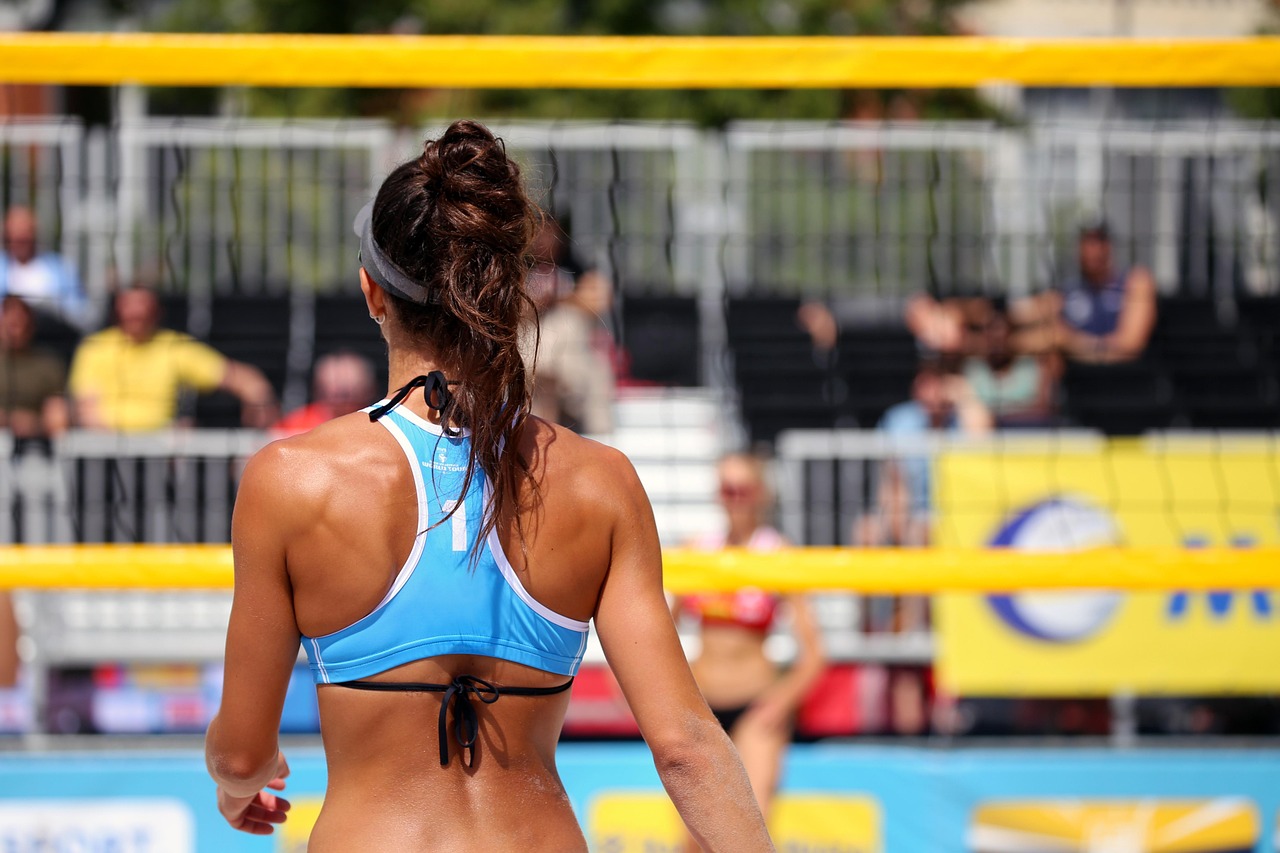
Denmark is not a beach volleyball country in the same natural sense as Brazil, Australia, Cyprus, or Southern California. Its climate and coastline do not create year-round sand culture in the same way. Still, beach volleyball has a meaningful place in the Danish volleyball picture. The sport fits summer events, urban outdoor spaces, coastal communities, and a European beach calendar that gives smaller nations a realistic chance to create international moments.
Danish beach volleyball has been present in CEV structures, including Continental Cup and Nations Cup competition. That presence matters because beach volleyball offers a different competitive equation from the indoor game. A country does not need a deep professional league to develop a credible beach pair. It needs targeted coaching, committed athletes, enough high-level events, and the ability to specialize. For Denmark, beach volleyball can serve both as a complementary discipline and as a separate development opportunity.
The beach game also helps with skill transfer. Players who train on sand often improve ball control, serving variety, defensive range, and tactical independence. A Danish indoor player who spends time in beach volleyball can return to the gym with sharper problem-solving and better touch. For a volleyball culture trying to maximize a limited player pool, that cross-training value is real.
Volleyball Culture in a Competitive Sports Country
Denmark’s volleyball culture is serious but not dominant. That distinction explains much of the sport’s position. In some countries, volleyball is a national event. In Denmark, it is more often a dedicated club sport with pockets of intensity. The people inside the game care deeply, but the sport must keep earning space in schools, clubs, gyms, media, and federation budgets.
This can be a limitation, but it can also produce a durable culture. Danish volleyball is less dependent on hype than on continuity. Clubs that survive and compete year after year become anchors. Coaches become culture carriers. Senior players become examples for juniors. Domestic finals, cup matches, and national-team fixtures give the sport moments around which to gather.
The country’s volleyball identity is also shaped by balance between men’s and women’s development. A healthy Danish volleyball future cannot be built on one side of the sport alone. The more the federation and clubs can strengthen both pathways, the more resilient the sport becomes. Women’s volleyball, in particular, has growth potential because European volleyball offers clear competition structures, and strong club environments can elevate national-team quality over time.
The Future of Denmark Volleyball
Denmark’s volleyball future depends on converting structure into results. The country has enough organization to support a serious volleyball ecosystem. The question is whether that ecosystem can produce more players capable of competing consistently at higher European levels. That requires better youth retention, more high-level coaching, stronger domestic competition, and continued exposure to international matches.
The 2023 men’s EuroVolley return and the 2026 European League hosting role in Odense are signs of a country trying to reinsert itself into the European conversation. Denmark does not need to become a volleyball superpower for that progress to matter. It needs to become more consistently competitive, more visible, and more efficient at turning promising athletes into senior contributors.
The Danish volleyball identity is therefore best understood as a disciplined rebuild. It has club history, national-team ambition, beach volleyball opportunity, and a federation framework that gives the sport direction. Its next stage will depend on whether those pieces can become a stronger pipeline. If they do, Denmark can move from being a structured volleyball country to being a more dangerous one.