The Bahamas has the profile of a Caribbean volleyball country with two natural identities working at once: an indoor program trying to strengthen its regional standing, and an outdoor volleyball culture that fits easily with the country’s beaches, islands, resorts, schools, and community sports scene. Volleyball in the Bahamas is not built around the scale of a major professional league or a deep year-round collegiate system. Its identity is closer to a national-development model, where federation organization, youth pathways, senior national teams, and beach volleyball all matter to the sport’s long-term ceiling.
The Bahamas Volleyball Federation sits inside the NORCECA structure, which places Bahamian volleyball in the same continental system as the United States, Canada, Mexico, Cuba, Puerto Rico, the Dominican Republic, and the broader Caribbean. That matters because the competitive ladder for the Bahamas is regional before it is global. CAZOVA events, NORCECA opportunities, and Caribbean championship play are the measuring stick. Recent FIVB development coverage has framed the Bahamas as a federation working to become a more regular NORCECA competitor, with the men’s and women’s national teams finishing fourth and fifth at the 2023 Caribbean Zonal Volleyball Association Senior Championships.
Indoor volleyball gives the Bahamas its clearest competitive structure. The sport depends heavily on organized clubs, school participation, national-team training, and the ability to keep talented athletes connected to the game after the youth level. In a country spread across islands, volleyball development is not simply about producing one strong team. It is about maintaining coaching standards, building player identification systems, creating regular competition, and giving athletes enough meaningful matches to sharpen serve receive, blocking discipline, transition offense, and defensive communication. The federation’s challenge is partly geographic and partly structural: the country has athletic talent, but volleyball growth depends on giving that talent a consistent pathway.
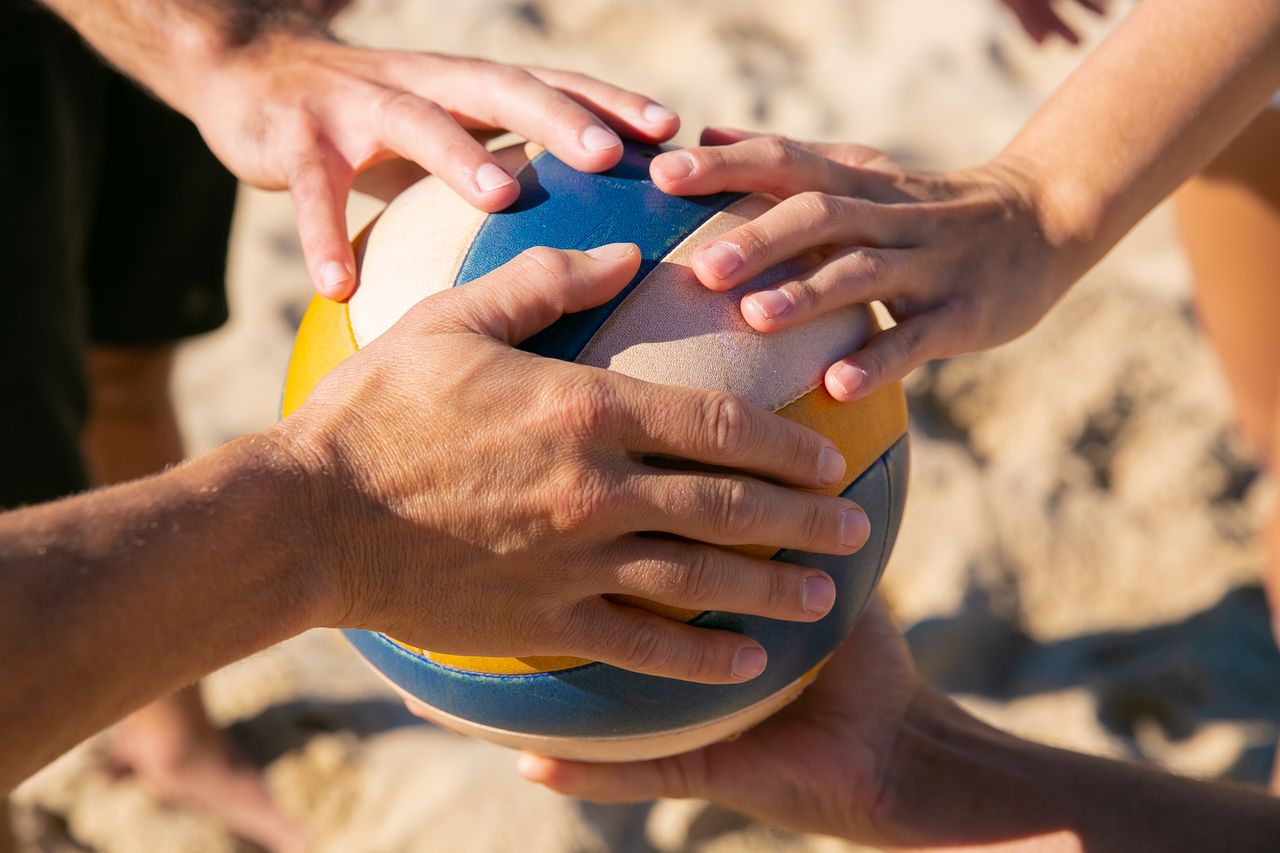
Beach volleyball gives the Bahamas a natural second lane. The setting is obvious, but beach volleyball does not become competitive simply because a country has sand and coastline. It requires technical training, two-player systems, defensive reading, serving strategy, ball-control under wind conditions, and tournament exposure. For the Bahamas, beach volleyball has strong potential because it can connect the country’s tourism image with a legitimate athletic discipline. A strong beach program also gives indoor players another way to develop touch, movement, court vision, and all-around skill.
The sport’s future in the Bahamas likely depends on how well indoor and beach volleyball support one another rather than compete for attention. A better-trained coaching base can help both versions of the game. More youth participation can create larger pools for national-team selection. More regional competition can give Bahamian players a clearer standard to chase. FIVB Volleyball Empowerment support has already been tied to coach development and national-team goals, which points to the country’s current stage: not starting from scratch, but trying to professionalize the pathway from local participation to Caribbean relevance.
The Bahamas is not yet one of the dominant names in NORCECA volleyball, but its volleyball identity is easy to understand. It is a compact island nation trying to convert athleticism, beach culture, school participation, and federation development into stronger regional results. The next step is consistency: more trained players, more trained coaches, more competitive events, and a system that allows Bahamian volleyball to be visible beyond isolated tournament moments.