Serbia has one of the clearest volleyball identities in Europe: it is an indoor volleyball power built on technical discipline, national-team excellence, strong club traditions, and a deep belief that volleyball is a serious competitive craft. In a country where basketball, football, water polo, and tennis all command major attention, volleyball has carved out a distinct place by producing elite teams, world-class players, and generations of athletes who understand the sport at a high tactical level.
Serbian volleyball is not defined by beach culture, resort recreation, or casual participation. Its reputation comes from the gym. It is shaped by packed indoor halls, structured training, national-team pride, and a playing style that values control, patience, blocking, serve pressure, and positional intelligence. Serbia’s best teams rarely look improvised. They tend to look organized, composed, and hard to break down.
That reputation did not appear suddenly. Serbia’s volleyball identity was built through the broader Yugoslav sporting system, then sharpened through the achievements of Serbian clubs and national teams after the breakup of Yugoslavia. The result is a volleyball nation with a smaller population than many of its rivals but a much larger competitive footprint than size alone would suggest.
The Yugoslav Roots of Serbia’s Volleyball Culture
To understand volleyball in Serbia, it helps to begin with the Yugoslav sports tradition. Volleyball developed in an environment where team sports were taken seriously at the institutional level. Clubs, schools, military sports organizations, and city-based athletic societies all played roles in creating a system where talented athletes could be identified, trained, and moved into higher levels of competition.
That broader sporting culture mattered. Yugoslavia produced strong teams across basketball, handball, water polo, football, and volleyball, and many of the same principles carried across sports: technical skill, tactical education, emotional toughness, and a strong club structure. Volleyball benefited from that environment because it rewards exactly those traits. A team can have height and athleticism, but without serve-receive discipline, setter-hitter timing, defensive structure, and collective patience, it will eventually be exposed.
Serbia inherited and refined that tradition. The country’s volleyball culture became associated with smart, polished indoor play. Serbian teams have often been comfortable in long rallies, comfortable defending against powerful opponents, and comfortable playing under the pressure of international tournaments. That confidence has been one of the defining traits of Serbian volleyball.
The men’s national team helped establish this reputation during the late Yugoslav and post-Yugoslav period. The 2000 Olympic gold medal in Sydney remains one of the landmark achievements in the history of Serbian and Yugoslav volleyball. That team represented the highest expression of a system that had been building toward the top of the international game. It showed that Serbia could compete not merely as a respectable European volleyball country, but as a champion on the Olympic stage.
The legacy of that era still matters. It gave Serbian volleyball a standard. Future teams were not trying to introduce the country to international relevance; they were trying to live up to an existing one.
A Men’s Program Built on Craft and Competitive Nerve
Serbia’s men’s volleyball history is filled with teams that could compete with the traditional powers of the sport. The country has had to face the full weight of European volleyball: Italy, Russia, Poland, France, Bulgaria, the Netherlands, and others. In that environment, Serbia became known as a team capable of winning through balance rather than relying on one overwhelming weapon.
At their best, Serbian men’s teams have combined size at the net with high volleyball IQ. Their outside hitters have often been asked to do difficult all-around work: pass under pressure, score out of imperfect situations, defend, and block against elite opposite hitters. Serbian middles have traditionally been important not only as attackers, but as blockers who can read the game and disrupt tempo. The setter position has also been central to the country’s style, because Serbia’s best teams tend to rely on rhythm, distribution, and calm decision-making.
Nikola Grbić stands as one of the defining figures of Serbian volleyball. As a setter, he represented many of the qualities associated with the country’s best teams: leadership, intelligence, control, and competitive composure. His influence extended beyond his playing career, and his name remains connected to the highest level of European and international volleyball. His brother Vladimir Grbić was another major figure, remembered for his athleticism, charisma, and role in Serbia’s rise as an elite volleyball nation.
That generation gave Serbian men’s volleyball a powerful identity. It showed that the country could produce not just strong teams, but players who shaped the way the sport was understood internationally. Serbia’s later European success, including continental titles and deep tournament runs, reinforced that the national team was not a one-generation story. It was part of a lasting volleyball culture.
The men’s program has had periods of transition, as all national teams do. Maintaining an elite level in European volleyball is difficult because the margins are thin and the depth of competition is severe. Serbia is rarely judged only by qualification or participation. It is judged against medals, semifinals, and the country’s own history. That expectation can be heavy, but it is also part of what keeps Serbian volleyball serious.
The Rise of Serbia’s Women as a Global Force
If Serbia’s men established the country as a major volleyball nation, the women’s national team elevated Serbia into one of the defining forces of modern international volleyball. The rise of the Serbian women’s program has been one of the most impressive national-team stories of the 21st century.
Serbia’s women have won at the highest levels because they combine physical power with technical structure. The team has produced elite attackers, disciplined blockers, and enough backcourt stability to survive against the best opponents in the world. Their style can be direct and forceful, but it is not simple. Serbia’s women’s teams have often been excellent at controlling the middle of the net, creating pressure with the serve, and using high-level attackers to finish points when rallies become chaotic.
Tijana Bošković is the central figure in this era. As one of the best opposite hitters in the world, she has given Serbia a reliable point-scoring foundation against elite opponents. Her left-handed attack, range, power, and ability to score in high-pressure situations have made her one of the most important players in international volleyball. But Serbia’s success has not been only about one star. The team’s major achievements have depended on setters, middles, liberos, outside hitters, and role players who understood how to perform within a demanding system.
The women’s national team’s Olympic, World Championship, and European Championship success changed the scale of Serbia’s volleyball identity. It gave the country a modern dynasty-level reputation on the women’s side. For younger Serbian players, the national team became visible proof that volleyball could lead to the highest stages in sport: Olympic podiums, world titles, professional contracts, and recognition far beyond the region.
That matters for development. Countries produce elite athletes more consistently when young players can see a path. Serbia’s women’s program has given girls in the sport a direct line from local gyms and youth clubs to the global game. The national team has become both a competitive machine and a symbol of what Serbian volleyball can produce.
Club Volleyball and the Serbian Development System
Serbia’s volleyball strength is tied closely to its club system. Clubs are not just teams that play matches; they are development environments where players learn the technical and tactical habits that later define the national teams. Belgrade, Novi Sad, Niš, Kragujevac, Subotica, and other cities have all contributed to the broader volleyball landscape, with clubs serving as anchors for training, competition, and player movement.
Red Star Belgrade and Partizan are major names in Serbian sport generally, and their volleyball sections are part of the country’s club tradition. Vojvodina, based in Novi Sad, has also been one of the most significant clubs in Serbian men’s volleyball. These institutions matter because they connect volleyball to the wider culture of Serbian club sport, where identity, rivalry, and development often intersect.
The domestic league does not have the financial power of Italy, Turkey, Poland, or some of the other major European volleyball markets. That creates a familiar pattern: Serbia develops high-level players, and many of the best eventually move abroad to stronger professional leagues. This is not a sign of weakness. It is part of Serbia’s place in the volleyball economy. The country functions as both a competitor and a producer of talent.
For Serbian players, moving abroad can be an important step. Italy, Turkey, Poland, Russia, and other major leagues have offered higher salaries, deeper professional infrastructure, and the chance to compete against elite international players every week. Serbian athletes who succeed in those environments often return to the national team sharper and more experienced. In that sense, the domestic system and foreign professional leagues work together. Serbia develops the player; Europe’s top leagues often harden that player.
Youth development in Serbia is also connected to the country’s broader sports culture. Athletes are often introduced to volleyball through schools, local clubs, and city sports programs. The most talented players are moved into more competitive environments, where technique is emphasized early. Passing, serving mechanics, footwork, blocking discipline, and tactical awareness are not treated as secondary details. They are the foundation.
That is one reason Serbia has remained competitive despite its relatively small population. The country cannot rely on massive participation numbers alone. It has to identify, teach, and refine talent efficiently. Volleyball in Serbia is strongest when that development chain works cleanly from youth level to club level to national-team level.
A Country Where Indoor Volleyball Sets the Standard
Beach volleyball exists in Serbia, but it does not define the country’s volleyball reputation. Serbia is landlocked, and while outdoor volleyball can be played recreationally in parks, summer events, and temporary sand courts, the country’s international identity is overwhelmingly indoor. The gym is the center of gravity.
That indoor-first identity affects the way volleyball is discussed, taught, and valued. Serbia’s volleyball culture is built around six-player systems, substitutions, rotations, blocking schemes, serve-receive patterns, and the tactical battle between setter and blocker. The country’s best players tend to be developed for the demands of indoor volleyball rather than converted from a beach-first environment.
This distinguishes Serbia from countries where volleyball identity is split more evenly between indoor and beach. Brazil, the United States, Italy, and some coastal volleyball nations have multiple high-profile pathways. Serbia’s pathway is more concentrated. Its volleyball story is about national teams, clubs, European competition, and indoor excellence.
That concentration has advantages. It gives the system clarity. Coaches know what they are developing players for. Young athletes know what the elite version of the sport looks like. Clubs understand the technical demands. The national team benefits from players who have grown up inside a relatively coherent volleyball culture.
The Serbian Style: Discipline, Height, and Tactical Patience
Every national volleyball culture has its own tendencies. Serbia’s best teams are often associated with discipline, size, and tactical patience. They can play with emotion, but their strongest performances usually come when that emotion is organized rather than frantic.
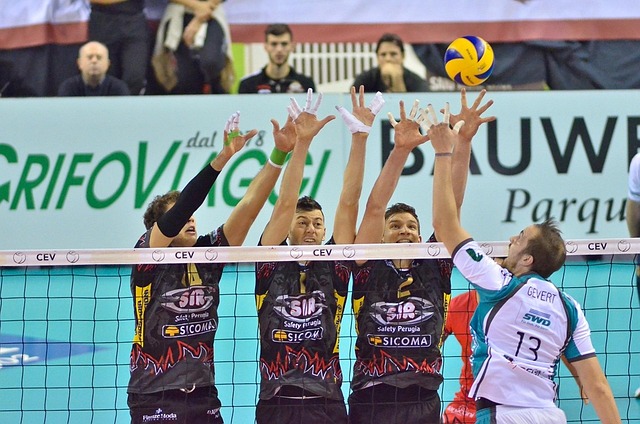
Blocking has long been a major part of Serbian volleyball identity. A strong Serbian team can make the net feel crowded. Middles and pins are expected to read the opposing setter, close seams, and force attackers into difficult angles. This does not always mean producing spectacular stuff blocks. Just as often, it means taking away the cleanest swing and allowing the defense to extend the rally.
Serbian teams also tend to understand the value of controlled aggression. Serving is important, but not simply as a power contest. A well-placed serve that disrupts the opponent’s first tempo can be as valuable as a high-risk ace attempt. In international volleyball, where every team has elite attackers, the ability to damage the opponent’s offense before the set is made is critical.
Offensively, Serbia has often relied on high-level opposites and outside hitters who can score against organized blocks. This is especially important in tournament volleyball, where opponents scout tendencies and force teams into uncomfortable situations. The ability to score out of system separates good teams from medal teams. Serbia has produced players capable of carrying that burden.
The country’s setters have also been central to its identity. Serbian volleyball values decision-making. A setter must understand not only who is available, but when to speed up, when to stabilize, when to use the middle, when to isolate a pin hitter, and when to trust a back-row option. That cerebral side of the game fits Serbia’s broader sporting personality.
Fan Culture and National-Team Pride
Volleyball in Serbia does not always dominate the everyday sports conversation the way football or basketball might, but national-team success changes the atmosphere. When Serbia reaches major finals, Olympic matches, European Championship stages, or World Championship medal rounds, volleyball becomes part of the national sports conversation in a much larger way.
Serbian fans understand elite team sports. They are used to high expectations in basketball, water polo, tennis, and other international competitions. That creates a demanding environment for volleyball. Success is celebrated, but it is also expected once a program has established itself. Serbian volleyball teams are not viewed as charming underdogs. They are viewed as medal-capable representatives of a serious sporting country.
The women’s national team has played a major role in expanding volleyball’s visibility. Their success gave the sport a broader public profile and helped create new reference points for young athletes. A player like Tijana Bošković is not simply a volleyball name; she is part of Serbia’s larger modern sports identity.
The men’s historic achievements still carry weight as well. Olympic gold, European success, and the Grbić-era legacy remain part of the country’s volleyball memory. Together, the men’s and women’s programs give Serbia a rare balance: historic credibility on one side and modern dominance on the other.
Serbia’s Place in European and World Volleyball
Serbia occupies a distinctive place in global volleyball. It is not the richest volleyball market. It does not have the population base of the United States, Brazil, Russia, or Japan. It does not have the same domestic league profile as Italy, Turkey, or Poland. Yet it consistently belongs in conversations about elite volleyball nations.
That is the mark of a true development country. Serbia’s influence comes from the quality of its athletes, coaches, and volleyball education. Its players are valuable in foreign leagues because they arrive with strong fundamentals and competitive maturity. Its national teams are respected because they can beat anyone when their core is healthy and in rhythm.
In Europe, Serbia sits among countries where volleyball is both a competitive sport and a national craft. The region has produced many of the world’s strongest volleyball cultures, and Serbia’s record gives it a firm place in that group. Matches against Italy, Poland, Turkey, Russia, the Netherlands, Bulgaria, and other European powers are not just fixtures; they are tests of volleyball systems.
Globally, Serbia’s women have become one of the benchmark programs of the modern era. The men remain tied to one of the sport’s great Olympic stories and continue to represent a country with deep technical roots. That combination gives Serbia a volleyball identity that is both historic and current.
The Future of Volleyball in Serbia
The future of Serbian volleyball depends on maintaining the development system that made the country successful while adapting to the modern professional game. International volleyball is faster, more physical, and more specialized than ever. The best teams now need elite serving, stronger back-row attacking, deeper benches, and advanced scouting. Serbia has the volleyball intelligence to adapt, but it must continue producing enough high-level players to keep pace with larger and wealthier rivals.
For the women’s program, the challenge is sustaining excellence beyond a golden generation. Great national teams often face difficult transitions when iconic players age out. Serbia’s task is to keep the pipeline strong enough that the program remains a medal contender rather than a team defined only by one era.
For the men, the goal is to reconnect fully with the highest tier of international competition. The history is there. The talent tradition is there. The question is whether each new generation can match the standards created by the country’s greatest teams.
At the club level, Serbia will likely continue to operate as both a competitive domestic scene and a talent exporter. That role can be powerful if the development system remains strong. Producing players who succeed abroad strengthens the national team, raises the profile of Serbian coaching, and keeps the country connected to the highest levels of the professional game.
Serbia’s volleyball identity is secure because it rests on more than one result, one player, or one tournament. It is built on decades of indoor volleyball knowledge, a national-team tradition with real medals behind it, clubs that understand player development, and a sporting culture that respects technical excellence. Serbia is not simply a country that has had good volleyball teams. It is one of the countries that has helped define what serious European indoor volleyball looks like.