Lithuania’s volleyball identity is not built around the same kind of deep indoor tradition that defines Poland, Italy, Serbia, or Türkiye. It is a more selective volleyball country, one where the sport has had to live alongside basketball’s overwhelming national profile while still carving out serious space through clubs, youth competition, and, most visibly in the modern era, beach volleyball. The strongest contemporary story in Lithuanian volleyball is not simply that the country participates in the sport. It is that Lithuania has begun turning a relatively modest volleyball base into moments of genuine international relevance, especially on sand.
That makes Lithuania a hybrid volleyball scene: indoor volleyball provides the domestic structure, school and club activity keep the game moving, and beach volleyball has become the country’s most visible route to global recognition. The result is a volleyball culture that does not look oversized from the outside but has enough organization, athleticism, and competitive ambition to produce players capable of representing Lithuania on major European and world stages.
A Volleyball Country Living in a Basketball Shadow
Any honest look at Lithuanian volleyball has to start with the country’s broader sports hierarchy. Basketball dominates the Lithuanian sports imagination in a way few sports dominate any European country. That reality affects volleyball’s place in the landscape. Volleyball is not the first national reference point for most Lithuanian sports fans, and indoor volleyball does not carry the same week-to-week professional visibility that it enjoys in Europe’s larger volleyball nations.
But that does not make the sport insignificant. It means Lithuanian volleyball has developed through a more concentrated model. It depends on clubs, municipal sport schools, federation activity, regional competitions, youth teams, and individual player breakthroughs rather than a massive commercial league system. The indoor national teams represent Lithuania in international competition, and the country remains part of the European volleyball structure through CEV events and age-group participation. Lithuania’s presence in CEV youth competition, including U16 women’s championship activity, reflects the sport’s continued development work beneath the senior spotlight.
This gives Lithuanian indoor volleyball a particular character. It is not a broad professional entertainment product. It is a development environment. The sport is built in gyms, schools, clubs, and regional competitions where players learn the technical basics: serve receive, setting rhythm, middle-blocker timing, defensive coverage, and the discipline required to play structured indoor volleyball. The pathway is narrower than in volleyball powers, but it exists.
The Indoor Game: Structure Before Spotlight
Indoor volleyball in Lithuania functions as the foundation of the sport. It supplies the player base, coaching habits, and competitive vocabulary that eventually feed both indoor teams and beach volleyball. Men’s and women’s national teams give the country a senior international identity, even if Lithuania is not a regular medal contender in major European or world indoor tournaments.
The indoor scene is especially important because it gives young athletes a full six-player education before any specialization. Setters learn how to manage tempo and location. Liberos and defensive specialists develop platform control. Outside hitters carry passing responsibility as well as attacking volume. Middles learn blocking footwork and timing. Those skills matter even when athletes eventually shift toward beach volleyball, where ball control, reading, serving, and transition decisions become even more exposed.
Lithuanian indoor volleyball is also shaped by geography and population size. The country does not have the player volume of larger European systems, so each generation of talent matters. A strong age group, a committed club, or a few players who find opportunities abroad can change how visible the sport feels for several years. That creates a volleyball culture where international results are less predictable but individual breakthroughs carry real weight.
For many Lithuanian players, the pathway may involve domestic clubs first, then regional European competition, university opportunities, or professional chances outside Lithuania. That pattern is common in smaller volleyball markets. The home system forms the athlete, but the broader European volleyball map often supplies the next level of competition.
Beach Volleyball Has Changed Lithuania’s Volleyball Profile
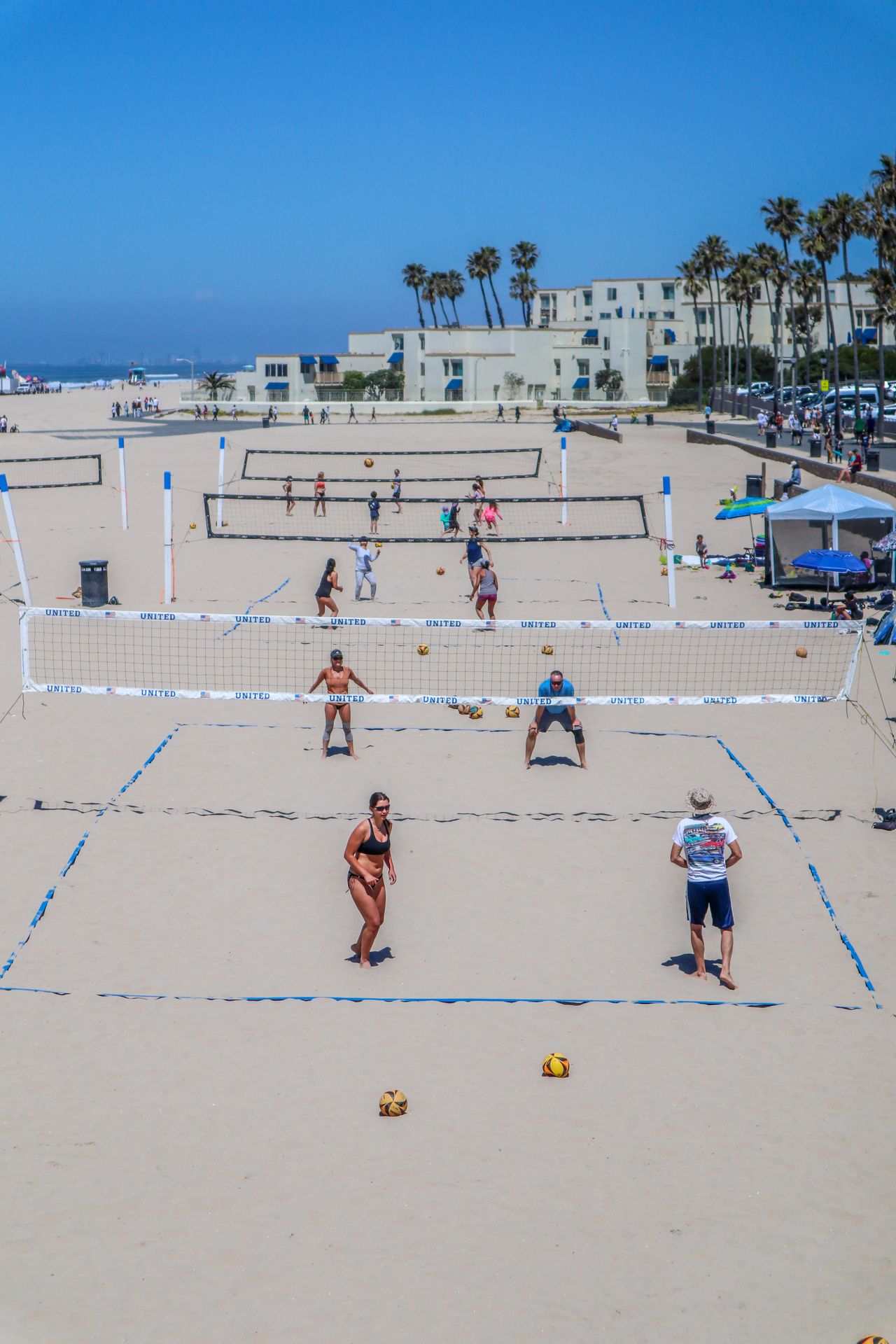
If indoor volleyball is the base, beach volleyball has become the headline. Lithuania’s modern volleyball reputation has been lifted significantly by Monika Paulikienė and Ainė Raupelytė, who became the first Lithuanian beach volleyball team to qualify for and compete at the Olympic Games when they reached Paris 2024. That milestone mattered because it gave Lithuanian volleyball a clear international marker: the country had produced a beach pair capable of entering the sport’s most visible global tournament.
Their qualification also changed the way Lithuania could be discussed in European beach volleyball. Instead of appearing mainly as a smaller participant, Lithuania had a pair that could be placed in the conversation with established beach nations. CEV noted Lithuania’s Olympic beach volleyball debut before Paris 2024, naming Paulikienė and Raupelytė as the country’s qualified team.
That kind of breakthrough does not happen by accident. Beach volleyball demands a different athlete profile from indoor volleyball. A two-player team has no hiding places. Passing, setting, attacking, blocking, serving, and defensive reading are shared across the pair. Lithuania’s leading women’s duo built its reputation through that complete-game pressure, and their progress helped make beach volleyball the country’s most internationally visible volleyball discipline.
The results after Paris reinforced that this was not a one-event story. In May 2026, Paulikienė and Raupelytė won their first Volleyball World Beach Pro Tour gold together at the Nuvali Challenge in the Philippines, after already reaching Challenge podiums in Tlaxcala and Xiamen earlier in the season. For a country without a huge beach volleyball machine behind it, that level of consistency gives Lithuania a legitimate competitive reference point.
Vilnius and the Value of Hosting
Hosting also matters for a country like Lithuania. When international beach events come to Vilnius, they do more than fill a calendar. They give local fans a chance to see the sport at a level that can be hard to replicate domestically. They also place Lithuanian players in front of home support, which helps turn individual achievement into national volleyball visibility.
Vilnius has become part of this story. CEV highlighted Lithuania’s reliance on its Olympians Paulikienė and Raupelytė during the 2025 Beach Volley Nations Cup Preliminary Phase in the capital, where the home setting gave Lithuania a stage to connect elite beach volleyball with local fans. Lithuania’s men and women also advanced from Vilnius pools into the 2025 Beach Nations Cup Finals, a sign that the beach program’s progress is not limited to one team alone.
That is an important distinction. A single great pair can raise attention, but a broader national beach presence suggests a deeper competitive project. Lithuania’s beach volleyball future depends on whether the success of its leading athletes can produce more players, better youth training, more events, and stronger domestic competition.
Player Legacy and the Lithuanian Volleyball Ceiling
Lithuania’s volleyball legacy is still being written. It does not yet have the long list of Olympic indoor medals, professional club dynasties, or world championship runs that define the sport’s traditional powers. Its significance comes from a different place: the ability of a smaller volleyball country to create elite outcomes through focused development and internationally competitive athletes.
That gives Lithuania an appealing volleyball profile. It is not trying to be Brazil or Poland. Its path is more compact. The country’s best volleyball future likely involves a combination of indoor development, targeted beach investment, improved coaching, and international exposure for top players. The stronger the indoor base becomes, the more likely Lithuania is to produce athletes who can succeed in both formats.
Women’s beach volleyball has already given the country a model. Paulikienė and Raupelytė showed that Lithuanian athletes can qualify for the Olympics, compete on the Beach Pro Tour, and win at Challenge level. The next step is turning that kind of success into a system rather than a peak. That means more juniors seeing beach volleyball as a serious pathway, more clubs supporting all-around ball control, and more events that make volleyball visible beyond the usual participant community.
Where Lithuania Volleyball Goes Next
The future of volleyball in Lithuania depends on depth. The country has already proven it can produce high-level beach players. The harder task is expanding the base behind them. Indoor volleyball needs continued youth participation, stronger domestic competition, and better routes for talented players to test themselves abroad. Beach volleyball needs facilities, coaching, pair development, and more competitive opportunities during the European season.
Lithuania’s volleyball identity is therefore best understood as a developing European scene with a major beach volleyball breakthrough. It is not an indoor powerhouse, but it is not a minor volleyball footnote either. The country has a working indoor foundation, visible national-team structures, home-event momentum, and a beach pair that has given Lithuanian volleyball one of its clearest international calling cards.
The strongest version of Lithuanian volleyball will probably remain hybrid: indoor training producing complete athletes, beach volleyball supplying the most visible international results, and federation-level development trying to connect the two. For a country where volleyball has to compete for attention in a crowded sports culture, that is a practical and increasingly credible path.