Taiwan’s volleyball identity is built around indoor competition, school development, club activity, and a steady presence in Asian volleyball. The sport does not occupy the same national spotlight as baseball or basketball, but it has a real place in Taiwan’s athletic system. Volleyball is visible in schools, universities, public recreation spaces, organized clubs, and international competition under the Chinese Taipei name.
The best way to understand volleyball in Taiwan is not as a beach-first scene or a casual resort sport. It is primarily an indoor volleyball culture, shaped by gyms, campuses, training groups, federation competition, and players who move through school and club pathways before reaching higher levels. Recreational volleyball exists across the island, but the deeper story is the connection between education, organized sport, and Taiwan’s long-term participation in regional competition.
A Structured Indoor Volleyball Country
Indoor volleyball is the center of Taiwan’s volleyball landscape. The island’s dense urban geography, strong school system, and heavy use of indoor sports facilities make volleyball a natural fit. In cities such as Taipei, New Taipei, Taichung, Tainan, and Kaohsiung, volleyball is often found in school gyms, university facilities, municipal sports centers, and private athletic venues.
Taiwan’s climate also helps explain the indoor emphasis. Hot, humid summers and frequent rain make reliable indoor access important for serious training. Outdoor volleyball can be played recreationally, but the competitive game is shaped more by court space, coaching, school programs, and gym availability than by beaches or public parks.
This gives Taiwan a volleyball scene that feels organized rather than informal. Players often encounter the sport through physical education, school clubs, university teams, or community programs. From there, the more committed athletes move into structured training environments where technical skill, positional development, and team systems matter. The sport’s rhythm is tied closely to school calendars, tournaments, and the broader Taiwanese approach to disciplined athletic development.
School and University Volleyball
School volleyball is one of the most important entry points for the sport in Taiwan. Students are commonly introduced to volleyball through physical education classes, intramural activity, and school teams. The sport is accessible because it can be played indoors, requires limited equipment, and fits well into group-based school recreation.
At the competitive level, school volleyball helps identify and develop players who can continue into university programs, amateur clubs, or national-team consideration. Taiwan’s volleyball culture benefits from this educational foundation because it gives the sport a consistent pipeline even when professional volleyball is not the dominant part of the national sports conversation.
University volleyball adds another layer. Campus teams, student tournaments, and intercollegiate competition give players a place to keep developing after secondary school. For many athletes, university volleyball is where the game becomes more tactical and physically demanding. Teams become more specialized, training becomes more serious, and players begin to understand volleyball as a sport of rotations, serve receive, blocking systems, transition offense, and match strategy rather than only a school activity.
That school-to-university connection is especially important in Taiwan because it helps sustain participation beyond childhood. Volleyball can remain part of adult life through alumni groups, workplace teams, social leagues, and recreational clubs. The sport has a natural bridge from youth participation into adult recreation.
Clubs, Training, and Player Development
Taiwan’s volleyball development structure is strongest where schools, clubs, and regional competition overlap. Serious players usually need consistent court time, qualified coaching, and competitive matches. In Taiwan, that often means training through school programs, university teams, local clubs, or specialized volleyball groups.
Youth players benefit from a sports culture that values repetition and technical precision. Volleyball rewards that kind of training. Passing, setting, serving, blocking footwork, defensive posture, and approach timing all require long-term development. Taiwan’s players are often built through structured practice rather than a purely informal pickup culture.
For beginners, the pathway is more flexible. Recreational players can find volleyball through community centers, adult classes, social groups, university clubs, and open-gym settings. In larger cities, players are more likely to find different levels of play, from casual mixed groups to competitive indoor sessions. Taipei and New Taipei are especially important because population density creates more opportunities for clubs, training programs, and adult volleyball communities.
For parents looking at youth volleyball, the key attraction is that the sport teaches coordination, communication, discipline, and team movement. It does not require the same individual equipment costs as some sports, and it can be played by boys and girls in school environments. That makes volleyball a practical sport for broad participation, even if the elite pathway still depends heavily on access to strong coaching and organized competition.
Chinese Taipei and International Volleyball
Taiwan competes internationally in volleyball under the Chinese Taipei name, and that international identity is an important part of how the sport is understood. The national teams have participated in Asian volleyball competition, where the standard is demanding. Asia includes some of the world’s most organized and technically advanced volleyball countries, including Japan, China, South Korea, Iran, and Thailand.
That regional context matters. Taiwan is not simply playing in isolation. Its volleyball programs are measured against countries with deep volleyball systems, professional leagues, and strong international records. Competing in that environment requires technical discipline, serve receive quality, defensive organization, and the ability to handle faster attacking systems.
For Taiwanese volleyball, international competition provides both a benchmark and a development tool. It gives players exposure to higher speeds, stronger servers, larger blockers, and more complex tactical patterns. It also gives the domestic volleyball community a visible goal. Even when volleyball is not the island’s top spectator sport, national-team activity helps keep Taiwan connected to the broader Asian and global volleyball map.
Women’s volleyball and men’s volleyball both matter to that identity, but the larger value is the continuity of representation. The Chinese Taipei name links Taiwan’s local gyms, schools, and clubs to the international volleyball calendar. For young players, that pathway gives the sport a sense of purpose beyond recreation.
Where Volleyball Is Played in Taiwan
The most reliable places to find volleyball in Taiwan are indoor facilities. School gyms, university courts, public sports centers, municipal recreation buildings, and private athletic spaces form the backbone of the volleyball map. Because Taiwan’s major cities are dense, court scheduling can be competitive. Organized groups often matter as much as the facility itself.
Taipei and New Taipei are natural hubs because of their population size and concentration of schools, universities, public transit, and sports venues. Taichung, Tainan, and Kaohsiung also have active volleyball scenes supported by educational institutions and community recreation. In smaller cities and towns, volleyball may be more tied to schools, local clubs, and community events rather than a large menu of independent adult leagues.
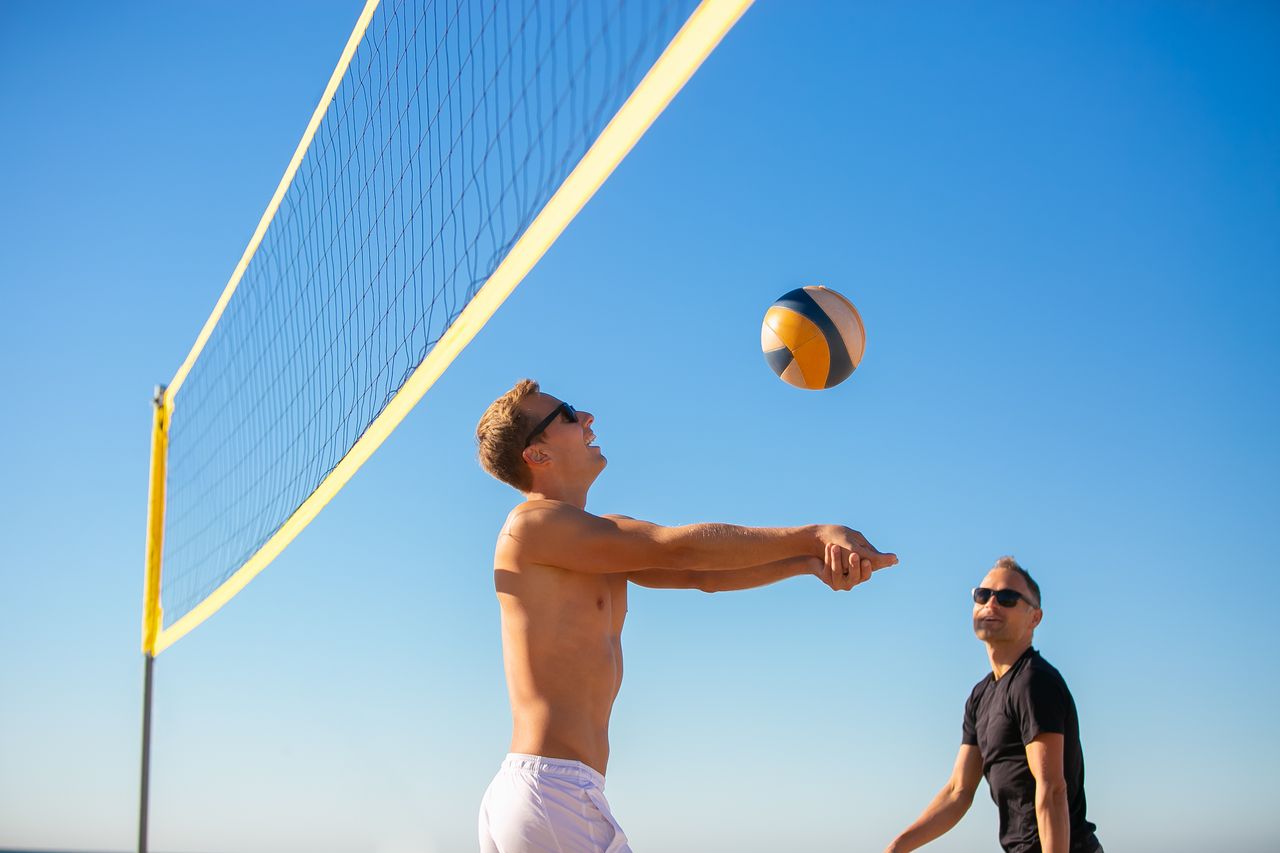
Outdoor volleyball exists, but it is not the defining feature of the Taiwanese game. Beaches and parks can support casual play, and some players enjoy outdoor formats, but Taiwan’s serious volleyball identity remains indoor-first. That does not make the scene narrow. It simply means that the main volleyball experience is built around training, teams, and organized courts.
For visitors or new residents, the best approach is usually to look for university clubs, public sports centers, adult recreation groups, and volleyball communities in major urban areas. The sport is accessible, but the most consistent games are often found through networks rather than by walking up to a public court.
Adult Volleyball and Recreational Play
Adult volleyball in Taiwan is supported by the same qualities that make the sport strong in schools: it is social, structured, and adaptable. Former school players can continue through recreational teams, workplace groups, community leagues, and weekend gym sessions. Beginners can enter through classes or casual groups, while experienced players can seek higher-level indoor runs.
Volleyball works especially well in Taiwan’s urban environment because it does not require a huge outdoor field. A single indoor court can support a full game, training session, or rotating group of players. Mixed volleyball is also common in recreational settings, which makes the sport more welcoming for adults who want competitive exercise without entering a highly formal league.
The adult scene is not only about competition. It also functions as a social sport. Teams require communication and rhythm, and players often build long-term groups around weekly court time. For a country where busy urban life can make consistent recreation difficult, volleyball offers a practical way to combine fitness, teamwork, and community.
Taiwan’s Volleyball Character
Volleyball in Taiwan is best understood as a disciplined indoor sport with strong school roots and a meaningful place in Asian competition. It is not defined by one famous beach or one dominant professional league. Its strength is broader and quieter: school gyms, university teams, local clubs, public sports centers, adult groups, and national teams that keep Taiwan connected to the regional volleyball scene.
For players, Taiwan offers a volleyball environment that rewards technical development and consistent participation. For beginners, the sport is approachable through schools, recreation centers, and community groups. For competitive athletes, the pathway runs through organized training and the challenge of Asian volleyball standards.
That combination gives Taiwan a serious but accessible volleyball identity. It is a place where volleyball is learned indoors, sharpened through structured practice, and sustained through schools, clubs, and adult communities across the island.